 ultimate-guide
Why Is My 4C Hair Always Dry? Fix It in 2026
Table of Contents
- Why 4C Hair Is Naturally Prone to Dryness
- How Hair Porosity Affects Moisture Retention in 4C Hair
- The LOC Method for 4C Hair: A Step-by-Step Guide
- Building a Deep Conditioning 4C Hair Routine
- Signs of Protein Overload in 4C Hair (and How to Fix It)
- Scalp Health vs. Hair Shaft Health: What Most People Miss
- Environmental and Lifestyle Factors That Dry Out 4C Hair
- Frequently Asked Questions
Last Updated: September 25, 2026
Why 4C Hair Is Naturally Prone to Dryness
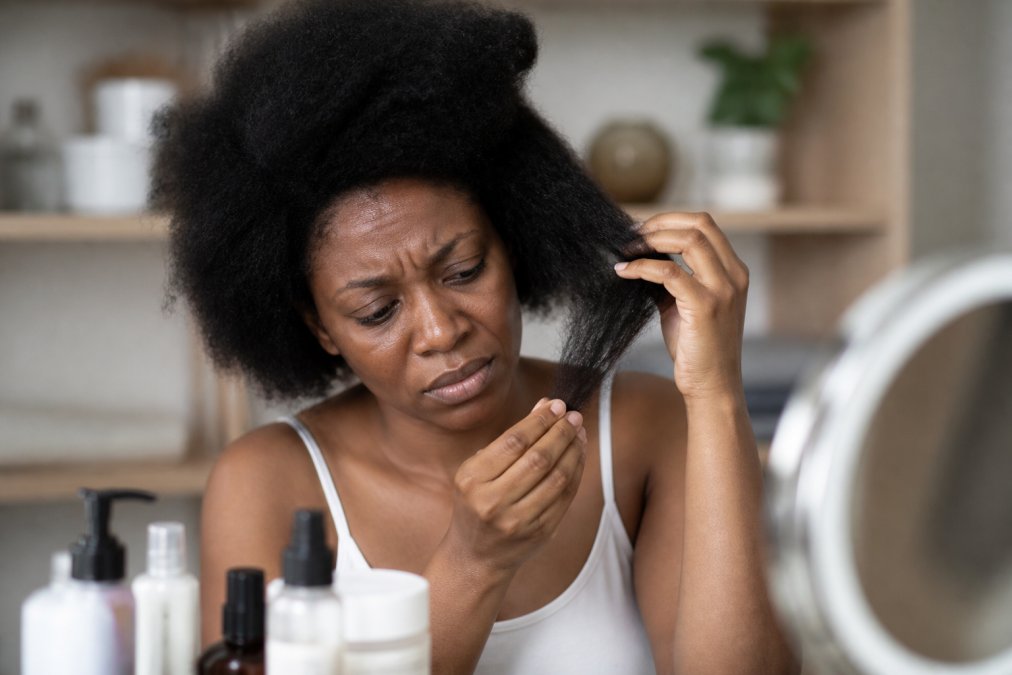
If you keep asking why is my 4C hair always dry, the answer starts with anatomy, not products. 4C hair is the tightest coil pattern, and its shape physically prevents scalp oils from traveling down the strand. Sebum must travel along the shaft to moisturize it, and on a tight coil that trip stalls within centimeters.
How Hair Porosity Affects Moisture Retention in 4C Hair
Hair porosity is your cuticle's ability to absorb and hold water, and it determines whether moisture retention products work for you. Low-porosity 4C hair has tightly closed cuticles that resist water; high-porosity hair absorbs fast and loses it just as fast.
- Low porosity: use lightweight, water-based moisturizers and gentle heat (a warm towel) to help products penetrate
- High porosity: layer heavier creams and seal with oil to slow moisture loss
- Medium porosity: maintain with consistent deep conditioning
The LOC Method for 4C Hair: A Step-by-Step Guide
The LOC method for 4C hair is the most reliable way to layer moisture so it stays in the strand rather than evaporating. LOC stands for Liquid, Oil, Cream, applied in that order on damp hair.
- Liquid: Apply a water-based moisturizer or leave-in to freshly washed, damp hair. Water is the only true moisturizer.
- Oil: Seal with a light oil to slow evaporation. Focus on ends, not the scalp.
- Cream: Finish with a butter or cream to close the cuticle and add slip for detangling.
Building a Deep Conditioning 4C Hair Routine
A deep conditioning 4C hair routine works best weekly or biweekly, depending on porosity and manipulation. Whether a mask works or just sits on top of your coils comes down to three variables most guides never mention: heat, time, and ingredient order.
Why heat is not optional for 4C hair
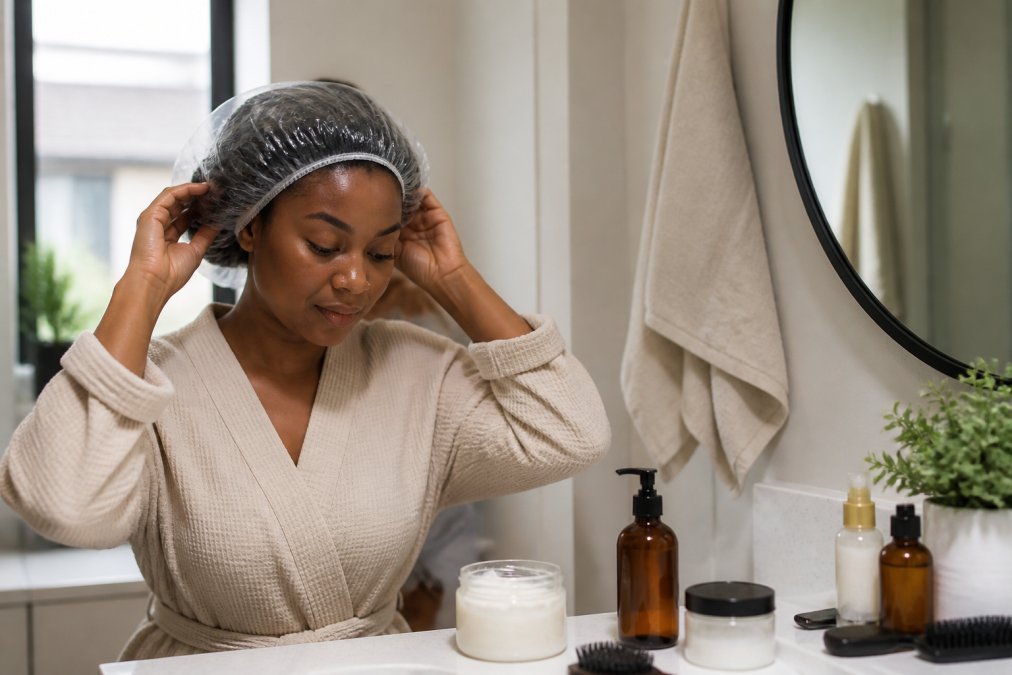
On low-porosity 4C hair, cuticle scales sit nearly flush, leaving a narrow window for water and conditioning agents to slip underneath. Warmth lifts the cuticle edge and thins the conditioner so it spreads through a tight coil instead of pooling at the root. A plastic cap traps body heat; a hooded dryer or warm towel adds more. Most practitioners find 20 to 30 minutes under moderate heat is the sweet spot, long enough for humectants and fatty alcohols to bind water, short enough to avoid steaming the strand into fragility.
The routine, with the reasoning attached
- Pre-poo (optional): Apply oil 20 minutes before washing to reduce stripping. Coconut oil penetrates the cortex; heavier butters sit on the surface and are better for sealing.
- Cleanse: Use a sulfate-free shampoo or co-wash. Focus lather on the scalp, let runoff clean the mid-lengths, and reserve the ends for conditioner only.
- Towel blot, do not rub: Squeeze excess water out with a microfiber towel or cotton T-shirt. Rubbing with terry roughs up the cuticle you just smoothed.
- Deep condition: Apply generously in sections, cover with a plastic cap, and sit under heat for 20-30 minutes. Comb through with a wide-tooth comb while the mask is in, that's your detangling window, not after rinsing.
- Rinse cool: Cool water contracts the cuticle and helps the conditioning film set. Skip this and hair feels rough the next morning.
- Style damp: Apply your liquid, oil, and cream while hair is still wet. Once the strand air-dries, the cuticle closes and absorption drops sharply.
How to tell if your mask is actually working
A deep conditioner that performs lists water first, followed by fatty alcohols (cetyl, cetearyl, stearyl) and humectants (glycerin, honey, panthenol), the ingredients that hold water inside the strand. If the first five ingredients are oils and butters with no water or fatty alcohol, you're buying a sealant, not a conditioner, and sealing dry hair locks the dryness in.
How often is too often
Weekly deep conditioning suits most 4C hair, but the schedule should flex. In a protective style with manipulation every two weeks, condition on wash day and leave it alone in between. If you heat style, color, or detangle daily, a weekly mask is the floor, not the ceiling. Protein masks belong on a separate cadence, every four to six weeks for most people, so you're not stacking strengthening treatments and creating stiffness.
Signs of Protein Overload in 4C Hair (and How to Fix It)
The signs of protein overload in 4C hair are stiffness, straw-like texture, and snapping without stretching. Healthy hair stretches before it breaks. Protein-heavy hair snaps immediately because it has lost elasticity.
| Sign | What It Means | The Fix |
|---|---|---|
| Snaps with no stretch | Protein overload | Pause protein, add water-based moisture |
| Mushy, limp strands | Moisture overload | Add a light protein treatment |
| Rough, dull ends | Buildup | Clarify, then re-moisturize |
| Shedding at the root | Often scalp-related | Check scalp health, not the shaft |
Scalp Health vs. Hair Shaft Health: What Most People Miss
Scalp health and hair shaft health are two separate systems, and treating them as one is why so many routines fail. The scalp is skin: it has a microbiome, produces sebum, and can become inflamed or flaky. The hair shaft is dead protein once it leaves the follicle.
Aphogee Shea Pro Vitamin Leave In →
- Cleanse the scalp thoroughly, not just the hair
- Avoid heavy oils directly on the scalp if you're prone to buildup
- Address flaking or irritation before layering styling products
- Remember that the scalp microbiome responds to pH balance in your cleansers
Environmental and Lifestyle Factors That Dry Out 4C Hair
Environmental and lifestyle factors dry out 4C hair more than most people realize. Dry indoor air, hard water, and friction all pull moisture from the strand, but each hurts differently, and matching the fix to the mechanism is what stops the cycle.
Hard water: the mineral film problem
Hard water carries dissolved calcium and magnesium that precipitate out and form a thin film on the cuticle, the same scale that builds up on a showerhead. That film blocks water and conditioning agents from reaching the cortex and roughens the cuticle so strands catch and break. If your hair feels waxy or dull no matter what you apply, hard water is a likely culprit.
Humidity and indoor heating: the moisture gradient
Hair behaves like a sponge that equalizes with the air around it. In low humidity, winter air, airplane cabins, heated offices, the air is drier than your hair, so water migrates out. In high humidity the reverse happens, and 4C hair can swell, frizz, and feel deceptively soft while actually being fragile because the cuticle is lifted.
Friction: the slow mechanical loss
Cotton pillowcases, rough towels, and wool hats create friction against a cuticle that is already the most fragile of any curl pattern. Over a night, that friction abrades the cuticle edges, and abraded cuticles lose moisture faster and tangle more. Satin or silk pillowcases and a satin-lined bonnet cut that friction dramatically, as do cotton T-shirts versus terry towels on wash day.
Diet and hydration: the inside-out factor
You cannot moisturize your way out of a nutritional gap. Hair is built from protein, and the follicle needs adequate protein, iron, zinc, and omega-3 fatty acids to produce a healthy strand. Severe calorie restriction, low-protein diets, and iron deficiency are associated with dry, brittle hair, the follicle prioritizes vital organs and the shaft gets what's left. If your routine is dialed in and your hair is still brittle, talk to a physician or dietitian rather than a product aisle.
Protective styling and nighttime routine
Protective styling and a consistent nighttime routine are your best defenses against all of the above. Sleep on satin or silk, keep ends tucked, and use a leave-in before bed. Avoid styles that pull the hairline tight, traction alopecia is a real risk with chronic tension, and tight styles restrict blood flow and sebum delivery. If you're transitioning from relaxers or growing out locs, expect extra dryness at the line of demarcation, where two textures meet and the strand is weakest.
Frequently Asked Questions
Why is my 4C hair still dry after moisturizing?
Your 4C hair may still feel dry after moisturizing because you're applying product to hair that hasn't been properly hydrated with water first. Water-based moisturizers need to go on damp hair to trap moisture inside the hair shaft. If you're layering oil or butter over bone-dry hair, you're sealing dryness in rather than locking moisture in. Try the LOC method: liquid (water or leave-in) first, then oil, then cream. Also check whether product buildup is blocking absorption, and clarify your hair regularly.
How often should you deep condition 4C hair?
Deep condition 4C hair once a week if your hair is dry, damaged, or transitioning. If your hair is healthy and well-moisturized, every two weeks works fine. Use a moisturizing deep conditioner for regular maintenance and a protein treatment only when your hair shows signs of damage like excessive breakage or loss of elasticity. Overusing protein can cause stiffness and snapping, so alternate between moisture and protein based on what your hair actually needs.
Should 4C hair be oiled every day?
No, oiling 4C hair every day can cause product buildup that blocks moisture from entering the hair shaft. Oil works best as a sealant applied after water-based moisture, not as a standalone daily treatment. A light oil or butter 2-3 times per week is usually enough for 4C hair. If your scalp feels dry, focus on scalp health separately with a lightweight scalp oil rather than coating your strands daily.
What is the best way to retain moisture in 4C hair?
The most effective way to retain moisture in 4C hair is to start with clean, clarified hair, apply a water-based leave-in conditioner to damp hair, seal with a natural oil, and finish with a butter or cream to close the cuticle. Protective styling like twists, braids, or wigs reduces manipulation and keeps ends tucked away. At night, sleep on satin or silk to prevent moisture loss. Deep condition weekly and avoid harsh sulfates that strip your hair's natural oils.