 ultimate-guide
Natural Hair Care Guide for Beginners: 2026 Roadmap
Table of Contents
- Start Here: Reading Your Hair Type, Porosity and Density
- Your First Natural Hair Care Routine for 4C Hair
- How to Detangle Natural Hair Without Breakage
- Best Moisturizing Products for Natural Hair (and How to Read a Label)
- Protective Styles for Beginners That Won't Pull Your Edges
- Transitioning from Relaxed Hair and Protecting Your Progress
- Budget-Friendly Ingredient Decoding and Everyday Hair Maintenance
- Frequently Asked Questions
Last Updated: September 20, 2026
Start Here: Reading Your Hair Type, Porosity and Density
The biggest beginner mistake is buying products before understanding your own hair. A natural hair care guide for beginners only works when it starts with diagnosis, not shopping. Your hair has three measurable properties that determine everything: curl pattern, porosity, and density.

Curl Pattern vs. Hair Texture: What Actually Changes Your Routine
Curl pattern describes the shape your hair forms, from loose waves to tight coils. Hair texture describes the thickness of each individual strand: fine, medium, or coarse. Confusing them leads to bad product choices, plenty of 4C heads have fine strands that need lightweight products, not heavy butters. Pattern decides your styling approach; texture decides how much product your hair absorbs before it feels greasy.
The Float Test: Finding Your Hair Porosity at Home
Hair porosity is your hair's ability to absorb and retain moisture, determined by how tightly the cuticle layers lie. The float test is quick: drop a clean strand of shed hair into a glass of water. Hair that floats is low porosity (cuticle tightly closed, products sit on top). Hair that sinks slowly is medium porosity, the easiest to work with.
Your First Natural Hair Care Routine for 4C Hair
A natural hair care routine for 4C hair follows one order, and the order matters more than the products. Cleanse, condition, moisturize, then seal. Skip or rearrange those steps and you'll fight dryness forever.
Wash Day Order: Cleanse, Condition, Moisturize, Seal
Start with a sulfate-free cleanser guidance from the American Academy of Dermatology or a co-wash to lift product buildup without stripping your scalp. Follow with a conditioner, rinse, then apply a leave-in to damp hair while the cuticle is still open. Sealing comes last: an oil or butter locks that moisture inside the hair shaft. Many beginners find that washing every 7-10 days suits 4C hair better than weekly washing, because coily textures dry out faster between washes.
How to Detangle Natural Hair Without Breakage
Detangling is where most new naturals lose their length. The fix is mechanical: section, lubricate, then work from the ends upward. Never detangle dry hair, and never start at the roots.
Sectioning, Slipping and the Tools That Save Your Ends
Divide hair into four to eight sections and clip each one out of the way. Apply a slippery product like African Pride Moisture Miracle Hydrate & Renew Curl Milk & Detangler for enough slip to release knots without snapping. Work through each section with a wide-tooth comb first, then a detangling brush if needed. Rushing this step with a fine-tooth comb on wet hair is how split ends and mid-shaft breakage happen.
| Step | Tool | Why It Matters |
|---|---|---|
| Section hair | Clips | Prevents re-tangling while you work |
| Add slip | Curl milk or detangler | Lets knots release instead of snap |
| Comb ends first | Wide-tooth comb | Removes tangles before they travel up |
| Finish roots | Detangling brush | Clears the densest part last |
Best Moisturizing Products for Natural Hair (and How to Read a Label)
The best moisturizing products for natural hair share three traits: water as the first ingredient, no drying alcohols, and humectants like glycerin or aloe. Everything else is marketing. Here is how to actually decode a label, category by category, so you can judge a bottle in under a minute.
The First Five Ingredients Rule
Ingredients are listed by weight, highest to lowest, until everything falls under 1%. The first five ingredients tell you almost everything about how a product will behave. If water (sometimes listed as "aqua" or "water (aqua)") is not first, the product is not a moisturizer, it is an oil blend or butter and cannot hydrate on its own.
Ingredients to Avoid vs. Ingredients to Seek
Avoid or limit:
- Drying alcohols, look for "alcohol denat," "SD alcohol," "isopropyl alcohol," and "ethanol" high on the list; they evaporate fast and take moisture with them. Fatty alcohols like cetyl alcohol, cetearyl alcohol, and stearyl alcohol are not drying, they are emollients and thickeners, and beginners routinely confuse the two.
- Sulfates, "sodium lauryl sulfate" (SLS) and "sodium laureth sulfate" (SLES) are strong surfactants that strip natural oils. Fine in an occasional clarifying wash, harsh for a weekly cleanser on dry, coily hair.
- Non-water-soluble silicones, "dimethicone," "cyclopentasiloxane," and "amodimethicone" coat the strand and build up, blocking the water-based products you apply afterward. Water-soluble silicones (prefixed with "PEG-") rinse clean and are less of a concern.
Seek:
- Humectants, glycerin, aloe vera, honey, and propylene glycol pull water from the air into your hair. They work best in humid conditions.
- Emollients and sealants, shea butter, coconut oil, jojoba, and castor oil slow moisture loss. Apply them after water, never instead of it.
- Proteins, hydrolyzed wheat, silk, or rice protein temporarily patch gaps in the cuticle. Useful for high-porosity or heat-damaged hair, but too much causes stiffness and breakage, so rotate protein and moisture.
The LOC Method, Explained Without the Jargon
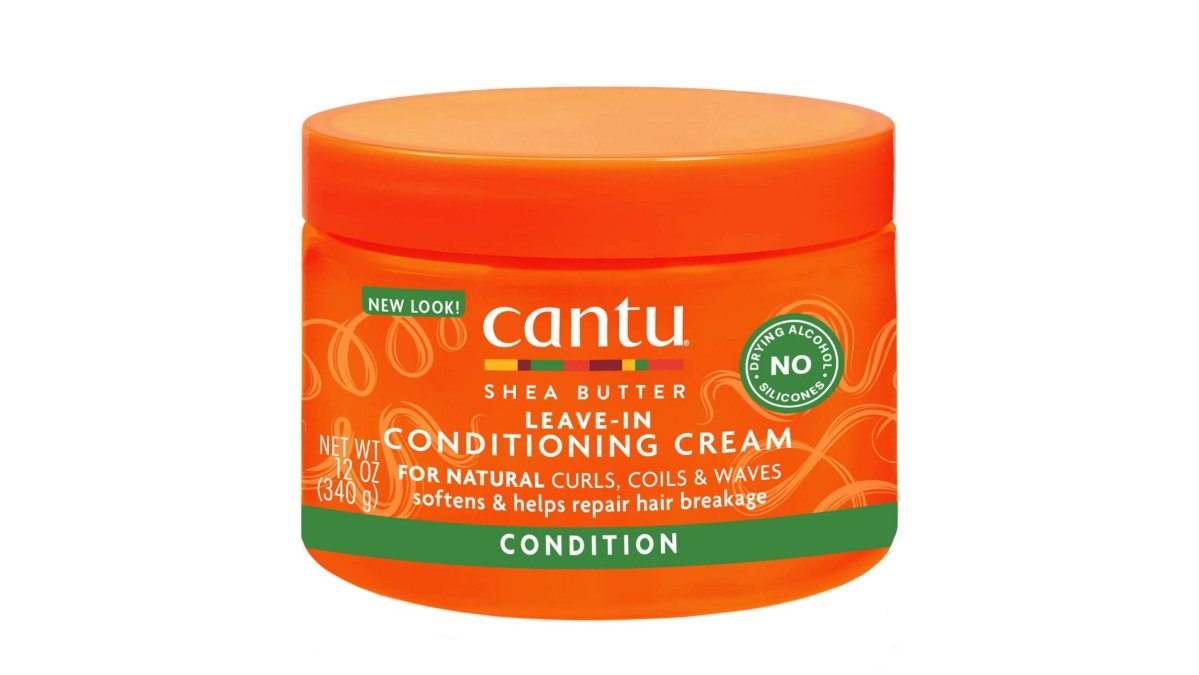
LOC stands for Liquid, Oil, Cream, applied in that order on damp hair. The liquid (water or a water-based leave-in) hydrates, the oil seals, and the cream holds the shape. For 4C hair, Cantu Shea Butter for Natural Hair Leave-In Conditioning Cream works as the liquid layer because it's water-based and sulfate-free, while Cantu Shea Butter Coconut Curling Cream adds definition on top.

A 60-Second Label Check You Can Do in the Aisle
- Is water the first ingredient? If not, put it back.
- Scan the next four, humectants, emollients, or a wall of drying alcohols?
- Search for "-cone" and "sulfate." One or two low on the list is fine; several near the top is a red flag.
- Match weight to texture: fine strands want lightweight, water-first formulas; coarse strands can handle butters and heavier creams.
That is the entire skill: read the first five ingredients and know which names to avoid.
Cantu Shea Butter For Natural Hair →
Protective Styles for Beginners That Won't Pull Your Edges
Protective styles for beginners should reduce manipulation, not add tension. Two-strand twists, flat twists, and loose braids are the safest starting points because they distribute weight evenly. If your scalp hurts, the style is too tight, traction alopecia from repeated tight styling is permanent in some cases (the American Academy of Dermatology). Keep styles in for two to four weeks, moisturize the scalp underneath, and give your hair a rest week between installs.
Transitioning from Relaxed Hair and Protecting Your Progress
Transitioning from relaxed to natural hair takes patience, and most guides skip the hard part: managing two textures at once. The line of demarcation where straight ends meet coily new growth is the weakest point on your head, and almost every setback, breakage, thinning, the urge to relax again, traces back to how you handle that seam.
Why the Line of Demarcation Breaks
Relaxed hair is structurally different from natural hair. The chemical process breaks disulfide bonds in the cortex, leaving straight strands more porous and weaker than the coily new growth. At the junction, the straight end stretches while the coil springs back, and the strand snaps. This is why transitioners lose length even when doing everything right. The fix is not a product, it is reducing mechanical stress at that seam.
Managing Two Textures Without Losing Length
- Detangle in smaller sections than you think you need. Four to eight sections is the starting point for fully natural hair; transitioners should go to eight or more, because the two textures tangle against each other.
- Deep condition weekly, focusing on the ends. The relaxed portion is the most porous part of your hair and loses moisture fastest. A moisturizing deep conditioner with heat (plastic cap and 15-20 minutes under a hooded dryer or warm towel) helps the cuticle absorb.
- Trim gradually, not all at once. To keep length, trim a small amount every 8-12 weeks as natural hair grows down, slowly removing relaxed ends without a big chop. A big chop is faster and removes the demarcation problem entirely, both paths are valid, depending on how much you value length versus simplicity.
- Loosen up on styling tension. Braids, twists, and buns that pull on the demarcation line accelerate breakage there. Keep styles loose and avoid heavy extension styles during the first year.
- Protect the seam at night. A satin bonnet or pillowcase reduces friction, and loose two-strand twists or a low, loose pineapple keep the two textures from rubbing against each other while you sleep.
A Realistic Timeline
Expect the process to take a year or more, often 18 to 24 months for shoulder-length relaxed hair to fully grow out. That timeline is normal, not a sign you're doing it wrong. Growth happens at roughly half an inch per month, so the math is predictable even when it feels slow. Track progress with monthly photos rather than daily mirror checks; the change is invisible day to day and obvious month to month.
The Emotional Side Nobody Warns You About
Most transitioners hit a wall between months three and eight. The two textures look awkward in the same style, shrinkage makes it feel like nothing is growing, and the relaxed ends look stringy next to the coils. This is where people give up, not because the routine failed, but because the in-between phase is genuinely uncomfortable and no one prepared them for it.
Budget-Friendly Ingredient Decoding and Everyday Hair Maintenance
You don't need a cabinet full of products to maintain natural hair. You need four categories done well: a cleanser, a conditioner, a leave-in, and a sealant. Decode labels by looking for water first, glycerin and aloe as humectants, and shea butter or coconut oil as sealants. Skip anything with "alcohol denat" high on the list. A basic, affordable routine beats an expensive one you don't understand.

Frequently Asked Questions
How do I start a natural hair care routine for beginners?
Begin with four steps: cleanse, condition, moisturize and seal. Wash or co-wash once a week with a sulfate-free cleanser, follow with a deep conditioner, then apply a leave-in while hair is still damp. Seal with a light oil or butter to slow moisture loss. Keep your tool kit small: a wide-tooth comb, a microfiber towel and a satin bonnet. Stick with the same four steps for a month before adding new products, so you can tell what actually works.
What are the best products for 4C hair types?
4C coils have tight, densely packed strands, so they need water-based moisture and heavier sealants. Look for a sulfate-free co-wash such as As I Am Coconut Co-Wash, a leave-in like Cantu Shea Butter Leave-In Conditioning Cream, and a curl cream for definition. For detangling, a slippery curl milk like African Pride Moisture Miracle Curl Milk Detangler helps separate knots with less friction. Avoid anything with drying alcohols high on the ingredient list.
How often should I wash my natural hair?
Most beginners do well washing or co-washing once a week. If your scalp gets oily or you use a lot of styling products, wash every five to seven days. If your hair feels dry and brittle after washing, stretch to every 10 to 14 days and use a co-wash in between. The goal is a clean scalp without stripping your strands. Pay attention to how your hair feels 48 hours after washing, not on wash day itself.
What is the LOC method for natural hair?
LOC stands for liquid, oil, cream. You apply a water-based leave-in first, then a light oil to seal it, then a cream to define and hold. The order matters because water is what actually hydrates the hair shaft, and the oil slows evaporation. For 4C hair, many people swap to LCO (liquid, cream, oil) if their coils need more definition before sealing. Try both and see which leaves your hair soft on day three.
How can I keep my natural hair moisturized daily?
Refresh with water first, not more product. Spritz your hair with water or a water-based curl milk, smooth it through with your fingers, then add a small amount of leave-in or curl cream to the ends. At night, cover your hair with a satin bonnet or sleep on a satin pillowcase to reduce friction and moisture loss. If your hair feels dry by day two, your sealant is too light, so switch to a butter or heavier cream.
How do I detangle natural hair without breakage?
Work in four to six sections, never on dry hair. Mist each section with water or a detangler, then start at the ends and move upward with a wide-tooth comb or your fingers. Hold the hair near the scalp as you comb so the tension stays on your hand, not your roots. A curl milk with slip, like African Pride Moisture Miracle Detangler, makes this faster. Detangle before washing, not after, when hair is at its most fragile.