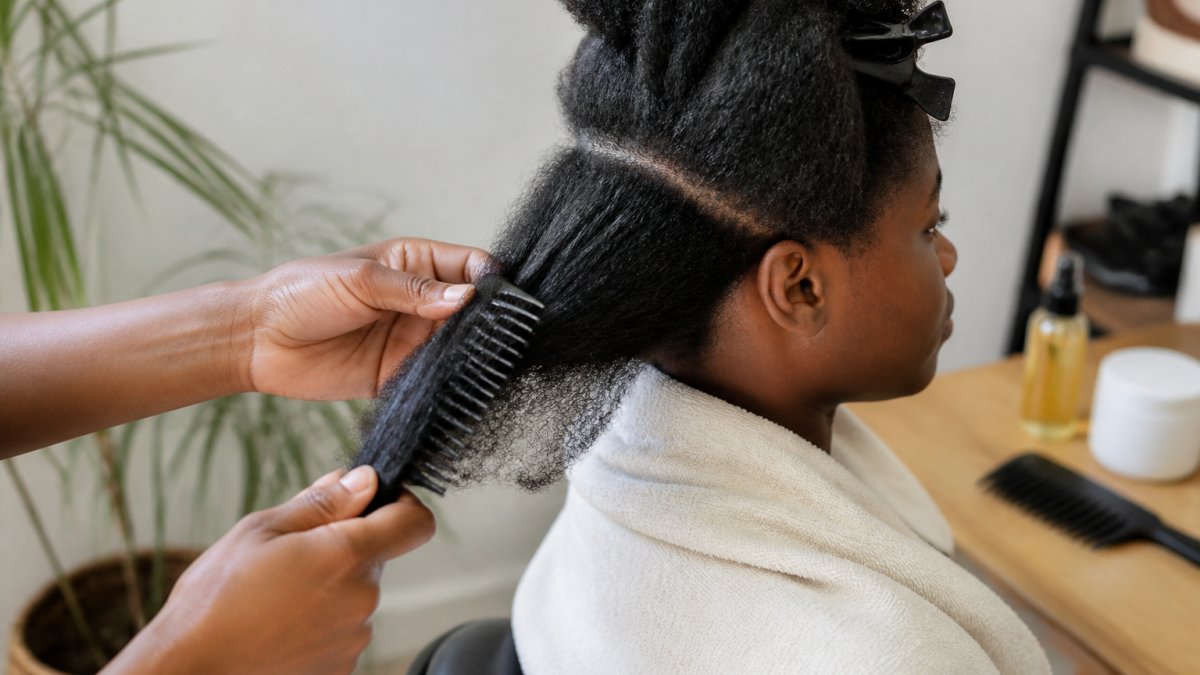
 how-to
How to Properly Detangle 4C Hair: Step-by-Step Guide
Table of Contents
- Step 1: Prep 4C Hair for Detangling (What You'll Need)
- Step 2: Decide Wet, Damp, or Dry Detangling
- Step 3: Section Your Hair Into Small Twists
- Step 4: Work Ends to Roots With Water and Conditioner
- How to Detangle 4C Hair Without Breakage
- Best Detangling Brush for 4C Hair (and Combs That Work)
- How Often to Detangle 4C Hair (and Prevent Tangles Between Wash Days)
- Conclusion: Build a Gentle 4C Detangling Routine
- Frequently Asked Questions
Last Updated: October 12, 2026
Step 1: Prep 4C Hair for Detangling (What You'll Need)
Learning how to properly detangle 4C hair starts long before you pick up a comb.
At Hair Naturally Beauty Supply, we hear the same story from customers: tangles that snap, combs that snag, and handfuls of hair in the sink.
Here is what you need before you start:
- A spray bottle filled with warm water
- A slippery conditioner or deep conditioner
- A wide-tooth comb or detangling brush
4C hair detangling is the process of separating shed hair and knots from your coily strands without pulling the hair out at the root.
Step 2: Decide Wet, Damp, or Dry Detangling
Most guides tell you to detangle wet with conditioner and stop there. That advice is fine for a routine wash day, but it ignores the situations where wet detangling is the wrong call: hair coated in heavy product, hair that has already been stretched by a braid-down, or hair that snaps the moment it gets saturated. Use the decision guide below to match the method to your hair's actual condition, not the calendar.
Wet detangling (saturated with water plus conditioner)
This is the default for most 4C hair on wash day. Water raises the cuticle and lets conditioner deposit enough slip that shed strands slide free instead of wrapping around healthy ones.
- Best for: heavy tangles, post-protective-style takedowns, hair that has not been detangled in two or more weeks, and hair with normal elasticity.
- Watch out for: wet hair stretches. A strand that is already weak from heat, color, or protein loss will stretch past its limit before it snaps. If your hair feels mushy or gummy when wet, that is a sign of compromised elasticity, detangle damp instead.
- Mechanism: water plus conditioner lowers friction between strands. Without conditioner, water alone actually increases friction on 4C coils because the cuticle swells and grabs neighboring strands.
Damp detangling (mist, not soak)
Damp means the hair is flexible but not dripping. You get some slip from residual conditioner or leave-in, without the full stretch of soaking-wet hair.
- Best for: mid-week refreshes, light tangles at the nape and edges, hair with low elasticity, and fine 4C strands that break easily when saturated.
- Watch out for: less slip means more snagging. Keep a spray bottle within reach and re-mist the section the moment the comb starts to drag.
- Mechanism: partial hydration softens the coil pattern enough to open the tangle, but the strand retains more of its natural strength than it does when fully wet.
Dry detangling (no water, slip product only)
Dry detangling is the least forgiving method and the one most often done wrong. It is not "comb dry hair with nothing on it." It is separating hair that already has a leave-in, oil, or butter on it, usually to prep for a wash or to section before styling.
- Best for: pre-wash sectioning, hair with heavy product buildup that would turn gummy if wetted, and very high-shrinkage hair where wetting causes instant re-tangling.
- Watch out for: dry 4C hair has almost no slip. If you feel resistance, stop and mist the section. Forcing a comb through dry coils is the fastest way to create mid-shaft splits.
- Mechanism: the product already on the hair provides lubrication. Adding water on top of certain butters and heavy creams can cause the product to seize and grab, which is why some people detangle dry before washing rather than after.
How to pick in ten seconds
Ask three questions in order:
- Is my hair coated in heavy butter, grease, or gel? If yes, detangle dry or damp first, then wash. Wetting heavy product can make it tacky.
- Does my hair stretch and stay stretched when wet? If yes, wet detangling is safe. If it snaps back weakly or feels mushy, go damp.
- How long since the last detangle? Under a week, damp is fine. Over two weeks, go wet with plenty of conditioner and expect to work in smaller sections than usual.
Step 3: Section Your Hair Into Small Twists
Sectioning is the step that saves your arms and your hair. Working in small sections keeps you from fighting the whole head at once.
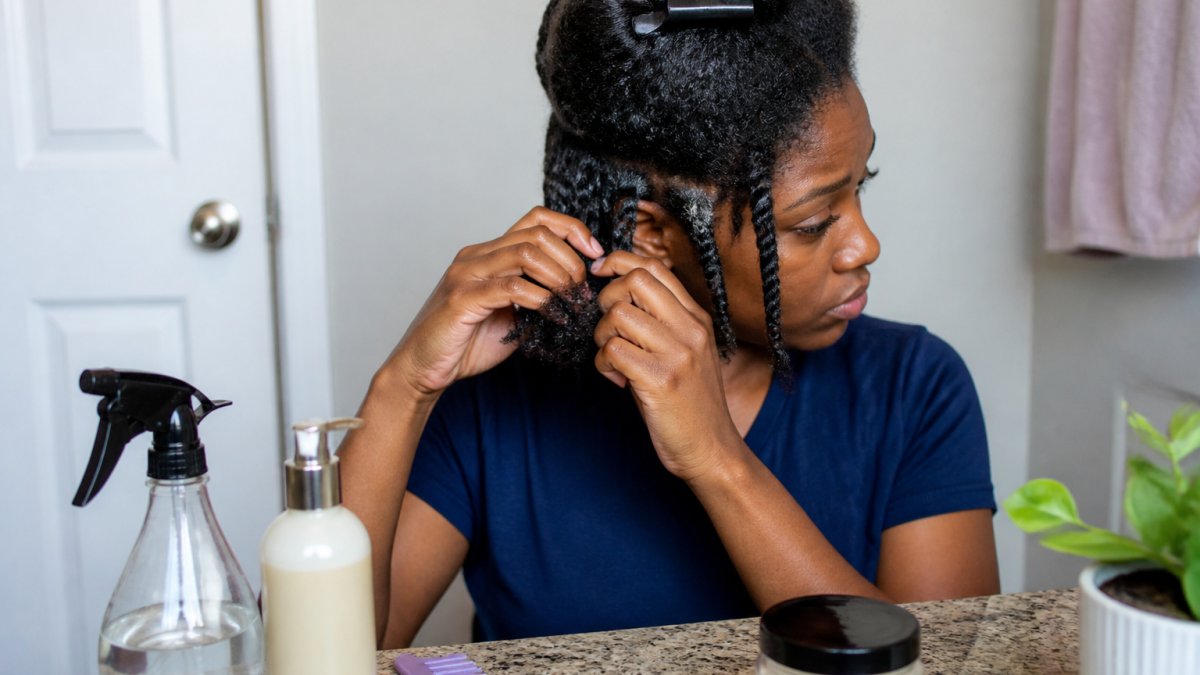
Divide your hair into four to eight sections. Twist each one loosely and clip it out of the way.
Small sections mean less hair to manage in each pass. That means less pulling, less tugging, and fewer knots left behind.
Step 4: Work Ends to Roots With Water and Conditioner
Always start at the ends and work toward the roots. The ends are the oldest, driest part of your hair, and they tangle first.
Here is the order that protects your strands:
- Spray the section with warm water until it is damp.
- Apply conditioner from mid-shaft to ends.
- Use your fingers to loosen knots first.
- Switch to a wide-tooth comb or detangling brush.
- Work from the ends up to the roots in small passes.
Finger detangling comes first for a reason. Your fingers feel a knot before a comb rips through it. Once the big tangles are gone, a comb glides through with gentle tension.
Add more water and conditioner as you go. Slip disappears as hair dries, and dry hair snags.
How to Detangle 4C Hair Without Breakage
The single rule for detangling 4C hair without breakage is simple: never pull through a knot. If the comb stops, stop with it.
Breakage happens when you force a tool through tangled hair. The strand stretches, then snaps. Over time, that shows up as thin ends and uneven length.
A few habits keep your hair intact:
- Detangle once per wash day, not daily
- Keep hair saturated with water and conditioner
- Use gentle tension, never force
Best Detangling Brush for 4C Hair (and Combs That Work)
There is no single best tool for 4C hair. There is a best tool for the section you are working on right now. The mistake most people make is picking one tool and forcing it through every stage of the detangle, fingers for the big knots, a comb for the mid-length, a brush for the finish. Match the tool to the job.
Fingers first, always
Your fingertips are the only tool that can feel a knot before it tightens. Use them to:
- Find the tangle and pin it between two fingers so you are not pulling on the root.
- Tease the knot apart strand by strand instead of dragging through it.
- Identify whether a tangle is shed hair wrapped around live hair (common) or a true single-strand knot (rare, and needs a different approach, see below).
Fingers do not replace a comb. They clear the path so the comb does not have to fight.
Wide-tooth comb: the workhorse
A wide-tooth comb is the safest tool for the bulk of 4C detangling. Look for:
- Teeth spaced roughly a quarter-inch apart. Wider than that and shed hair slips through without being removed. Narrower and you are back to snagging.
- Seamless construction. Run your thumbnail along the teeth. If you feel a ridge or a seam, that edge will shave your cuticle over time. Seamless resin or hand-cut wood is worth the extra cost.
- No ball tips on 4C hair. Ball-tipped combs catch on coils and pop strands. Skip them.
Use the wide-tooth comb on damp-to-wet, conditioner-saturated sections that are no wider than two fingers. If the comb stops, do not push. Back it out, finger-detangle the spot, and try again.
Detangling brush: the finisher
A detangling brush with flexible bristles works best after the wide-tooth comb has removed the bulk of the shed hair. Two features matter:
- Flexible bristles on a cushioned base. The bristles should bend around a tangle rather than drive through it. Stiff bristles on a rigid base behave like a fine-tooth comb and will snap 4C strands.
- Bristle length matched to section size. Short bristles work on small sections. Long, widely spaced bristles work on thicker sections but miss shed hair near the scalp.
Use the brush on sections that are already mostly detangled, working from ends to roots in short strokes. Do not start a wash day with a brush on tangled 4C hair, that is how brushes get blamed for breakage they did not cause.
Tools to avoid on 4C hair
- Fine-tooth combs. They catch on every coil and create mid-shaft splits.
- Boar-bristle brushes. Designed for smoothing straight or wavy hair, not for opening coils.
- Rat-tail combs. The metal tail is for parting, not detangling. Using the teeth on 4C hair shreds the cuticle.
Matching tool to section size
| Section size | Best tool | Why |
|---|---|---|
| Whole head | None, do not attempt | Too much hair, too much pulling |
| Palm-sized | Wide-tooth comb | Enough room to work, still manageable |
| Two-finger width | Wide-tooth comb, then brush | Comb clears shed hair, brush smooths |
| Single coil | Fingers only | Anything else snaps the strand |
The American Academy of Dermatology's hair care guidance notes that gentle handling and the right tools help prevent traction damage over time. Traction damage is cumulative, a tool that snags a little today is a tool that thins your edges over a year.
How Often to Detangle 4C Hair (and Prevent Tangles Between Wash Days)
Detangle 4C hair about once per wash day, which is usually every one to two weeks. More often than that adds unnecessary stress. Less often lets knots and matting build up.
Between wash days, a few habits keep tangles away:
- Sleep with a satin bonnet or pillowcase
- Wear loose twists or braids at night
- Keep hair moisturized so it does not dry out
If you wear protective styles, detangle before you install them and after you take them down. That is when matting is most likely.
Conclusion: Build a Gentle 4C Detangling Routine
Detangling 4C hair does not have to hurt or cost you length. The routine is the same every time: prep with water and conditioner, section into small twists, and work from ends to roots with a wide-tooth comb or detangling brush.
When you are ready to stock up, Hair Naturally Beauty Supply carries conditioners, deep conditioners, combs, and detangling brushes made for coily textures.
Shop now and build a detangling routine your hair will thank you for.
Frequently Asked Questions
Is it best to detangle 4C hair wet or dry?
Wet or damp detangling is generally safer for 4C hair because water and conditioner provide slip, which lets strands slide past each other instead of snapping. Dry detangling can work for quick finger separation before wash day, but it creates more friction and breakage risk. If you detangle dry, mist with water and apply a leave-in conditioner first. Most people with 4C hair get the best results by detangling on damp, conditioner-coated hair in small sections.
How can you detangle 4C hair with less breakage?
Work in small sections, start at the ends and move toward the roots, and use a wide-tooth comb or detangling brush coated in conditioner. Apply gentle tension and stop pulling when you feel a snag; use your fingers to loosen the knot instead. Detangle once per wash day rather than daily, and monitor for excessive shedding. If you see many short broken pieces, switch to finger detangling for a few weeks and add a deep conditioner to restore slip.
What tools are best for detangling 4C hair?
A wide-tooth comb and a detangling brush with flexible bristles are the two most useful tools. A wide-tooth comb handles large sections and loosens big tangles, while a detangling brush with soft, flexible bristles glides through smaller sections with less pulling. Finger detangling is the gentlest option for severe knots or single-strand knots. Avoid fine-tooth combs and stiff-bristle brushes, which can snag coily hair and cause breakage.
Should you detangle 4C hair before or after shampooing?
Detangle before shampooing. Dry, tangled 4C hair knots further when water hits it, and shampooing without detangling first can lead to matting. Spend 10-15 minutes finger-detangling and removing shed hair before you get in the shower. Then shampoo in sections, and follow with a deep conditioner. After rinsing, detangle again with conditioner in your hair to catch any new tangles before styling.