 how-to
Does Scalp Massage Actually Stimulate Hair Growth?
Last Updated: November 12, 2026
Quick Summary
Scalp massage may support healthier hair by boosting blood flow and reducing tension around follicles, but the evidence is far from settled. The most-cited study is small and uncontrolled, and it showed only a modest change in hair-shaft thickness, not new hair growth in balding areas. Treat scalp massage as part of a healthy hair-care routine, not a treatment for hair loss.
- The small Japanese trial did not show a meaningful change in hair density, the outcome that would indicate regrowth.
- Press with the pads of your fingers and move the scalp, not the hair, using circles about the size of a quarter.
- Spend about 30 to 45 seconds per zone and keep total sessions to three to five minutes.
- Most guidance points to around five minutes a day, a few times a week, and consistency matters more than length.
- See a doctor first for sudden shedding, patchy hair loss, or an itchy, painful scalp.
Table of Contents
- The Science Behind Scalp Massage and Hair Growth
- What the Scalp Massage Hair Growth Study Really Shows
- How to Scalp Massage for Hair Growth: A Step-by-Step Technique
- How Long to Massage Scalp for Hair Growth and How Often
- Scalp Massager for Hair Growth: Fingers vs. Tools
- Who May Benefit and Who Should See a Doctor First
- Realistic Timelines and Measurable Outcomes
- Building a Scalp Massage Routine with the Right Products
- Frequently Asked Questions
The Science Behind Scalp Massage and Hair Growth
Does scalp massage actually stimulate growth? The honest answer is that it may support healthier hair, but the evidence is far from settled. This guide from Hair Naturally Beauty Supply breaks down what research suggests, what it does not prove, and how to massage safely if you want to try it.
Many guides promise dramatic regrowth, but the research does not back that up. What it does suggest is more modest, and still worth knowing.
Scalp massage is the practice of applying gentle, rhythmic pressure to the scalp with your fingertips or a tool. The idea is that this movement boosts blood flow and reduces tension around the hair follicles.
How Mechanical Stimulation Affects Hair Follicles
Hair grows from follicles, tiny pockets under the skin. Each follicle cycles through growth, rest, and shedding. The growth phase is called the anagen phase.
Mechanical stimulation, meaning the physical movement of massage, may increase blood flow to the scalp. Better circulation can support nutrient and oxygen delivery to the follicle. Some researchers think this helps keep follicles in the growth phase longer. That is a theory, not a proven fact.
What we can say with confidence: massage feels good, softens the skin, and may ease scalp tension. Whether it changes hair thickness or growth rate in a lasting way is still being studied.
What the Scalp Massage Hair Growth Study Really Shows
The scalp massage hair growth study that gets cited most often is a small Japanese trial. The study is frequently summarized online as proof that massage grows hair, and that summary is inaccurate.
The reported result of this kind of small study is a modest change in hair-shaft thickness in some participants, not new hair growth in balding areas.
What the Study Actually Measured
Three outcomes matter when you read any scalp massage study:
- Hair-shaft thickness: the diameter of an individual strand, measured in micrometers. A thicker shaft can make hair look denser without any new follicles.
- Hair growth rate: how fast a strand lengthens per day, usually measured in millimeters.
- Hair density: the number of hairs per square centimeter. This is the outcome that would actually indicate regrowth, and the small trial did not show a meaningful change here.
A change in shaft thickness is not the same as regrowth. It can reflect a shift in the growth cycle, a change in sebum or hydration, or measurement variability. The study design cannot separate those explanations.
Study Limitations and What They Mean for You
Small, uncontrolled studies sit near the bottom of the clinical evidence hierarchy, and self-reported outcomes are vulnerable to expectation bias.
A randomized controlled trial with a sham-massage arm would be needed before anyone could responsibly say massage stimulates growth.
So treat the evidence as promising but early. If you try scalp massage, go in with realistic expectations. Think of it as part of a healthy hair-care routine, not a treatment for hair loss. If you are concerned about thinning, a clinician can discuss evidence-based options.
If you want a broader foundation, our natural hair care guide for beginners walks through the basics.
How to Scalp Massage for Hair Growth: A Step-by-Step Technique
Learning how to scalp massage for hair growth is simple, but the details matter more than most guides admit. The goal is to move the scalp over the skull without dragging the hair shafts. That distinction is what separates a useful routine from one that causes friction and breakage.
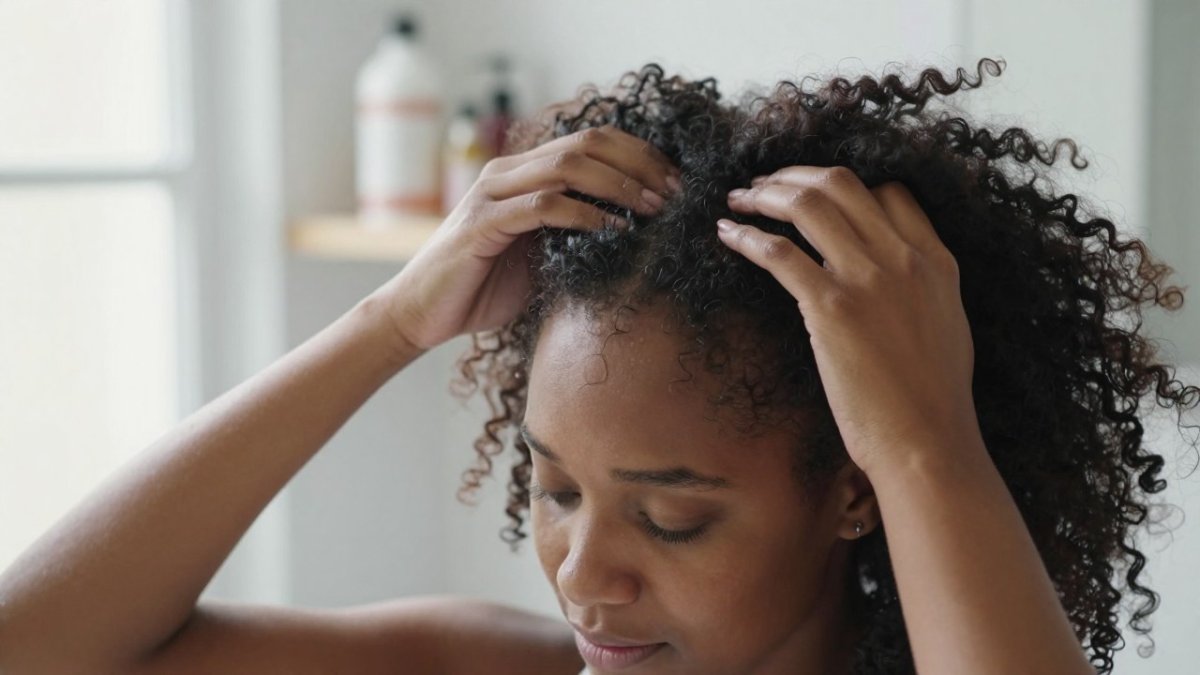
Here is a simple technique:
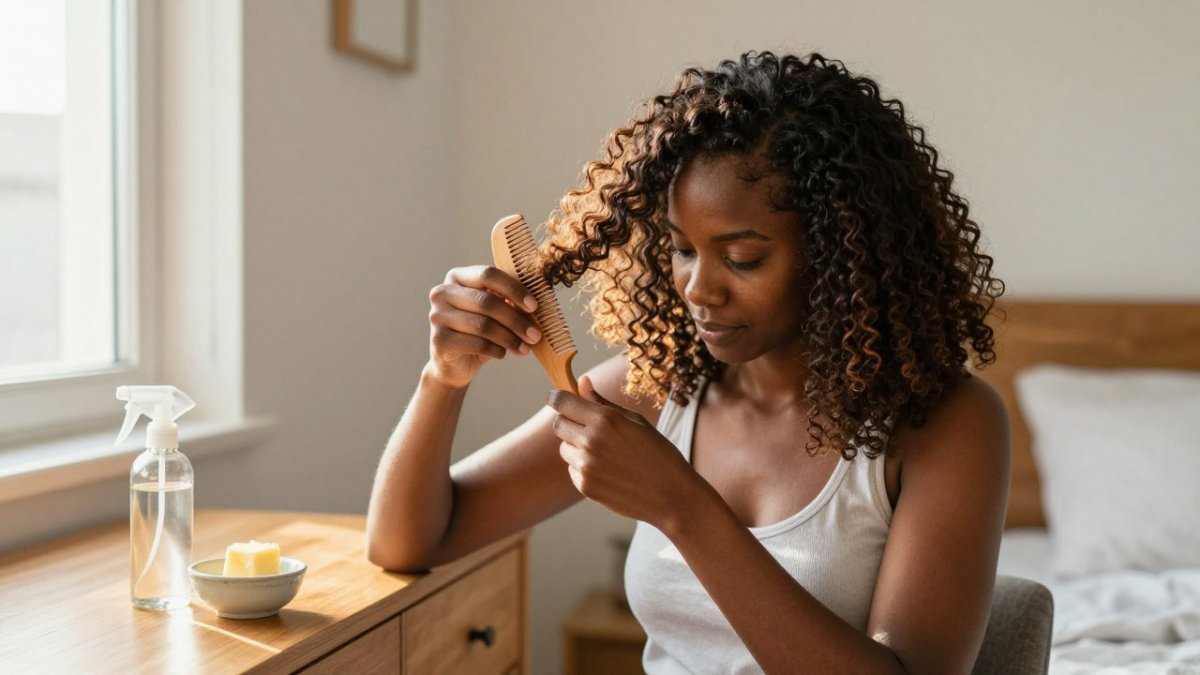
- Start with detangled hair. Work through knots first with your fingers or a wide-tooth comb. Massaging tangled hair pulls at the roots.
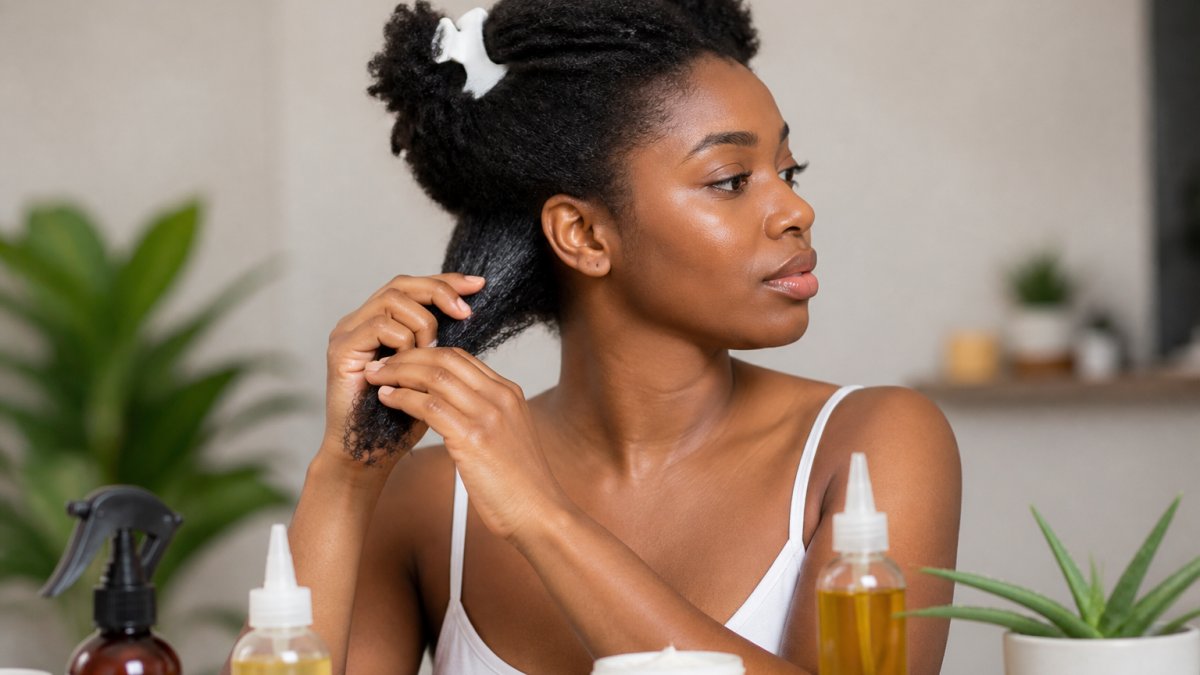
- Choose your base. Dry hair works for most people. A light oil or scalp serum adds slip and reduces friction, but use only a few drops, too much makes hair greasy and hard to manipulate.
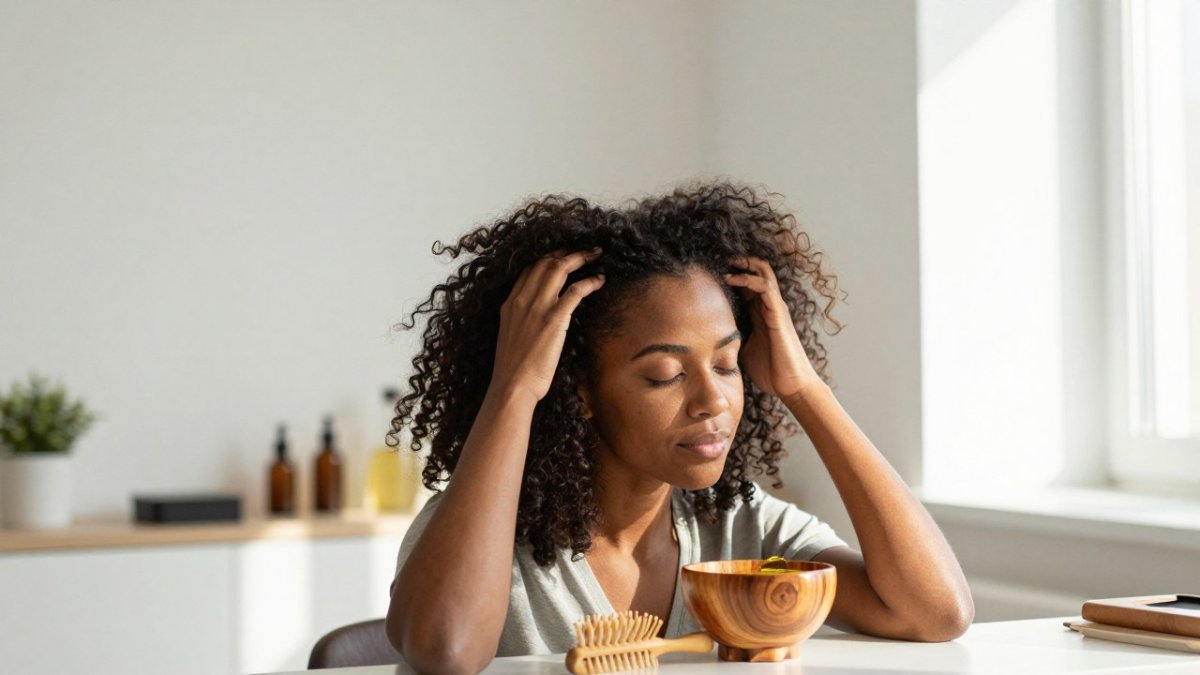
- Anchor with your palm. Rest the flat of your hand on your head and use the pads of your fingers, not your nails, to press into the scalp.
- Move the scalp, not the hair. Press down about the pressure you would use to massage your own temple, then make small circles roughly the size of a quarter. The skin should move under your fingers; the hair should not slide through them.
- Work in zones. Cover the hairline, temples, crown, sides above the ears, and the base of the skull. Spend about 30 to 45 seconds per zone.
- Keep it short. Three to five minutes total is enough. Stop when you have covered the scalp, not when your arms tire.
Pressure, Movement, and Avoiding Breakage
A common mistake is pressing too hard or dragging the hair. That causes friction and breakage, especially on coily textures. A useful gauge: if you can feel your scalp move but your hair is not being pulled at the root, your pressure is right. If you feel stinging, burning, or tenderness the next day, you pressed too hard.
Watch out: circular motions that twist the hair at the root are the most common cause of massage-related breakage. Keep the circles small and keep your fingers planted on the skin rather than sliding through the strands.
Adapting the Technique to Your Hair Type
- Long hair: gather it loosely at the crown or let it hang, and massage from the hairline inward so you are not raking through length.
- Curly and coily hair (3C to 4C): work in sections. Part the hair, massage one section at a time, and avoid dry detangling. A silicone-tipped massager can reach the scalp through dense hair with less hand fatigue.
- Fine or fragile hair: use lighter pressure and skip oils that weigh hair down. Fingers are gentler than stiff-bristled tools.
- Chemically treated or relaxed hair: wait at least a week after a relaxer or color service before massaging, and avoid pressing on any tender or scabbed areas.
For deeper guidance on protecting your ends and strands, see our guide on how to prevent breakage on 4C hair.
How Long to Massage Scalp for Hair Growth and How Often
How long to massage scalp for hair growth comes down to a few minutes per session. Most guidance points to around five minutes a day, a few times a week.
Consistency matters more than length. A short daily routine beats one long session you never repeat.
A simple schedule:
- Daily: 3-5 minutes, gentle circles
- Weekly: a few longer sessions if you enjoy it
- Skip: harsh pressure or pulling
More is not better here. Stop if your scalp feels irritated.
Scalp Massager for Hair Growth: Fingers vs. Tools
A scalp massager for hair growth can help, but fingers work well too. The right choice depends on your hair and your grip.
Fingers give you the most control over pressure. They are free and easy to feel. Tools can reach through thick hair and reduce hand fatigue.
| Method | Best For | Watch Out For |
|---|---|---|
| Fingertips | Control and gentle pressure | Hand tiredness |
| Silicone brush | Thick, coily hair | Too much friction if pressed hard |
| Electric massager | Relaxation and reach | Vibration may irritate some scalps |
Choosing a Scalp Massager for 4A, 4B, and 4C Hair
For coily textures, choose a massager with soft, flexible tips. Avoid stiff bristles that snag. Use it on dry hair or with a light oil to reduce pulling.
Best for: thick hair that is hard to reach with fingers. Skip if: your scalp is sensitive or easily irritated.
Who May Benefit and Who Should See a Doctor First
Many people may benefit from a gentle scalp massage routine. It can support relaxation and scalp health as part of a wider hair-care plan.
But scalp massage is not a fix for medical hair loss. If you notice sudden shedding, patches of missing hair, or an itchy, painful scalp, see a doctor first.
Signs to check with a professional:
- Rapid or patchy hair loss
- Redness, sores, or flaking that will not clear
- Pain or burning on the scalp
These can point to conditions that need real treatment, not massage.
Realistic Timelines and Measurable Outcomes
Do not expect overnight change. If massage helps at all, it works slowly, over weeks and months.
Track a few simple things:
- How your scalp feels
- Whether shedding seems steady
- Any change in how thick your hair feels
Take a photo each month in the same light. That gives you an honest baseline. If nothing changes after a few months, that is useful information too.
Building a Scalp Massage Routine with the Right Products
The right products make massage easier and gentler. A light oil or scalp treatment gives your fingers slip and reduces friction.
At Hair Naturally Beauty Supply, we carry scalp treatments and oils made for coily and curly textures. A popular pairing is our rosemary mint black castor oil, which many people use as part of their massage routine.
Massage also fits neatly into a full routine. See how to build the ultimate hair care routine for 4C hair to connect the steps.
A good scalp massage routine takes minutes, not hours. The challenge is sticking with it and choosing products that support your texture instead of fighting it. Hair Naturally Beauty Supply is a Black-owned shop built for 4A, 4B, and 4C hair, with fast shipping anywhere in the US. Browse our curated scalp treatments and oils, and get everything you need to start a gentle, consistent routine. Get started with Hair Naturally Beauty Supply and build a scalp care habit that fits your hair.
Frequently Asked Questions
Do scalp massages actually increase hair growth?
Scalp massage may support hair growth by improving blood flow to hair follicles and reducing scalp tension, but the evidence is limited. Small studies of massage have reported changes in hair thickness, but such studies often lack a control group. Massage is not a proven treatment for hair loss. Think of it as a low-risk addition to a consistent hair-care routine, not a replacement for medical evaluation if you notice sudden shedding or thinning.
How long should I massage my scalp to stimulate hair growth?
Many people massage for a few minutes per session, once or twice daily. Consistency matters more than duration. Set a timer, use gentle circular motions with your fingertips or a soft silicone massager, and avoid pressing hard enough to cause irritation. If your scalp feels sore or tender afterward, reduce pressure and time.
Is it better to massage with fingers or a scalp massager?
Both work. Fingers offer control and let you feel scalp tension, while a scalp massager can reach through thick 4A to 4C hair more easily and reduce hand fatigue. Choose a massager with soft, flexible bristles to avoid scratching. Whichever you use, keep movements slow and gentle. For coily hair, detangle first and avoid pulling at the roots, which can cause breakage.
Can scalp massage make hair thicker or is it just relaxation?
The honest answer is both. Massage supports relaxation and stress reduction, which indirectly supports scalp health. Results from scalp massage are not guaranteed and vary by person. Expect subtle changes over months, not weeks. Take dated photos to track hair density and length so you can judge realistically.