 how-to
How to Hydrate 4B Hair Daily: 7-Step Moisture Routine
Table of Contents
- Signs Your 4B Hair Is Dehydrated
- The LCO Method for 4B Hair: Order Matters
- How to Hydrate 4B Hair Daily: A 7-Step Routine
- How to Seal Moisture in 4B Hair Without Buildup
- SheaMoisture Coconut and Hibiscus Curl Enhancing Smoothie: Where It Fits
- Matching Your Routine to Porosity and Texture
- Common Mistakes That Undo Daily Hydration
- Frequently Asked Questions
Last Updated: September 27, 2026
Signs Your 4B Hair Is Dehydrated
Dry 4B hair feels rough, snaps without stretching, and looks dull. All three signs point to one problem: your hair is losing moisture faster than you're replacing it.
Watch for these warning signs:
- Hair feels straw-like even after washing
- Strands snap instead of stretching when you pull gently
- Ends look frayed or split
- Styles fall flat within a day
- Your scalp itches or flakes
The LCO Method for 4B Hair: Order Matters
The LCO method means liquid, cream, then oil, and the order is what makes it work. You apply water first, seal it with a cream, then lock everything in with oil.
How to Hydrate 4B Hair Daily: A 7-Step Routine
Daily hydration for 4B hair takes about five minutes once it's a habit. The goal: add water, hold it in, protect your ends.
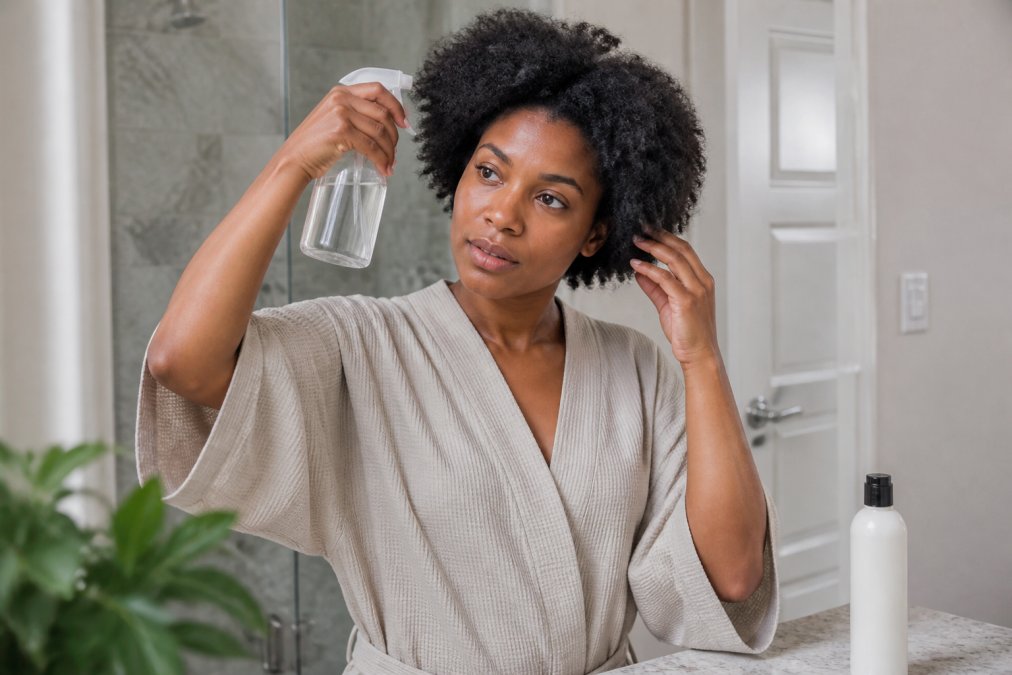
Step 1: Spritz With Water or a Water-Based Mist
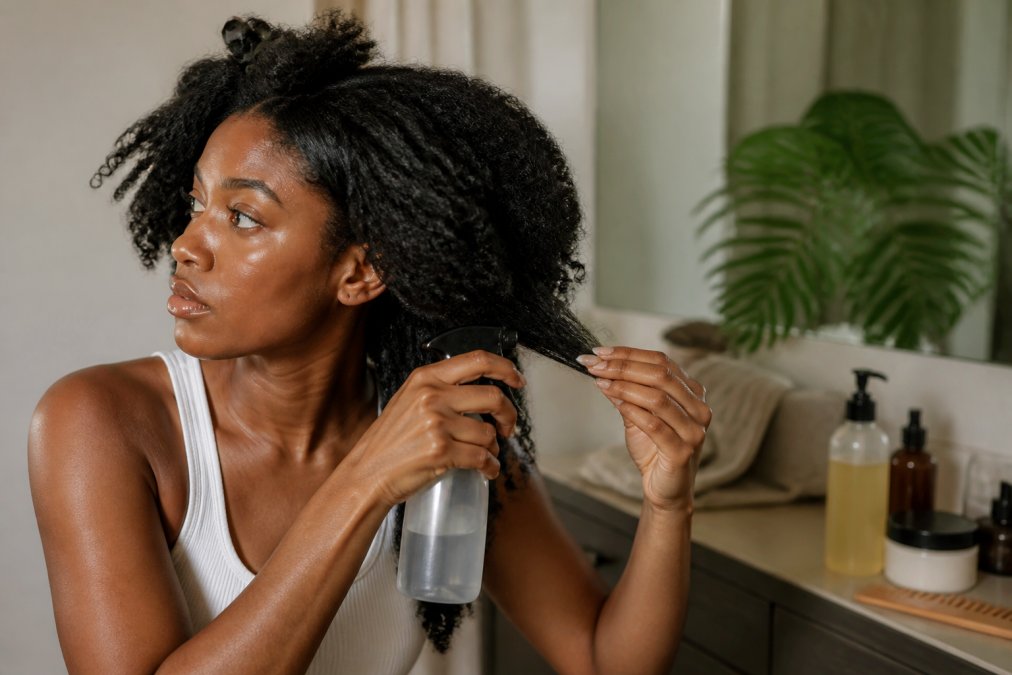
Fill a spray bottle with plain water or a water-based mist. Section hair into four to six parts and spray until damp, not soaked, focusing on your ends.
Step 2: Apply Leave-In Conditioner to Damp Hair
Apply leave-in while hair is still damp, since damp hair absorbs products better. Use a nickel-sized amount per section, working ends to roots with your fingers.
Step 3: Seal With Oil or Butter
Finish by sealing with a light oil or butter to trap the water and leave-in underneath. Jojoba, sweet almond, and grapeseed oils absorb without sitting heavy.
| Step | Product Type | Amount | Focus Area |
|---|---|---|---|
| 1 | Water or mist | Enough to dampen | Whole strand |
| 2 | Leave-in conditioner | Nickel-sized per section | Ends to roots |
| 3 | Oil or butter | A few drops | Ends and mid-lengths |
How to Seal Moisture in 4B Hair Without Buildup
Sealing works only if you understand what a sealant does. An occlusive, oils, butters, petrolatum-based products, does not add water. It forms a thin film that slows evaporation. That film is the point, and the problem when you overdo it.
The three product categories, and where each one fits
- Humectants (glycerin, honey, aloe vera, propylene glycol) pull water from the air and from deeper in the strand to the surface. They work best in humidity and can backfire in very dry air, pulling moisture out of your hair instead of in.
- Emollients (shea butter, coconut oil, jojoba, fatty alcohols) soften the strand and improve slip. They sit on the surface and in the gaps between cuticle layers. They are not sealants on their own.
- Occlusives (castor oil, petrolatum, beeswax, dimethicone) form the barrier that holds water in. This is your true seal step.
Most leave-ins and curl creams blend all three, so the first five ingredients tell you more than the front label. Glycerin or aloe near the top means humectant-heavy; shea butter or coconut oil leading means emollient-heavy; petrolatum or silicone first means occlusive-heavy.
How to seal without the waxy coat
- Use a few drops of oil per section, not a palmful. For medium-density 4B hair, roughly a quarter-sized total for the whole head is a reasonable starting point.
- Match the sealant weight to the season. Light oils like grapeseed and jojoba in humid months, heavier butters like shea or mango in dry months.
- Seal only on days you added water. Sealing dry hair just traps dryness in place.
- Keep creams for wash day and oils for daily refresh. Layering cream over cream is the fastest route to buildup.
- Clarify every two to four weeks with a sulfate shampoo or a chelating treatment if you use hard water. Buildup is not a product problem; it is a removal problem.
How to tell buildup from dryness
Buildup feels waxy, coated, or stiff, and products sit on top instead of absorbing. Dryness feels rough, brittle, and straw-like, and products absorb quickly but softness fades within hours. If hair feels worse after you add product, you have buildup, stop adding and clarify first.
SheaMoisture Coconut and Hibiscus Curl Enhancing Smoothie: Where It Fits
The SheaMoisture Coconut and Hibiscus Curl Enhancing Smoothie is a cream, so it belongs in step two of your LCO routine, adding softness and curl definition before you seal.
Matching Your Routine to Porosity and Texture
Porosity is how easily your hair takes in and releases water, determined by how tightly the cuticle layers lie against the strand. Most articles stop at "low porosity resists water, high porosity loses it", true, but it doesn't tell you what to change. Here's the deeper version, plus two factors almost nobody covers: humidity and water quality.
As I Am Doublebutter Cream Rich Daily →
Low porosity: the cuticle is closed
Low porosity hair has tightly overlapping cuticles, so water and products sit on the surface instead of soaking in. Signs: products sit on top, hair takes a long time to get fully wet, and it air-dries slowly.
What to change:
- Use lightweight, humectant-forward products. Heavy butters will coat rather than absorb.
- Apply to damp, not soaking-wet, hair. A little warmth, a warm towel, a plastic cap, or a steamer, helps lift the cuticle so water can enter.
- Avoid protein-heavy products unless your hair is genuinely damaged. Low porosity hair often reacts to protein with stiffness.
- Clarify regularly. Product residue sits on top of low porosity hair and blocks the water you are trying to add.
High porosity: the cuticle is raised
High porosity hair has gaps in the cuticle layer, drinking up water fast and losing it just as fast. Signs: hair soaks in seconds, dries quickly, feels rough, and tangles easily.
What to change:
- Layer water, a rich cream, then a heavier occlusive. Sealing is non-negotiable here.
- Lean on emollient-rich creams with shea, mango, or murumuru butter.
- Consider a protein treatment every four to six weeks to fill the gaps in the cuticle, but only if your hair stretches and snaps rather than stretching and bouncing back.
- Protect ends aggressively. High porosity ends are where moisture loss happens first.
Texture: 4B versus 4C
4B hair has a sharp Z-shaped pattern with less defined curl; 4C is tighter, denser, with fewer visible curl clumps. Both need water first, but 4C generally needs more water, more frequent sealing, and more section-by-section application because density makes it harder for product to reach the mid-shaft and ends.
The two factors most guides ignore
Humidity and dew point. Humectants like glycerin and honey pull water from the air. A high dew point, humid summer air, works in your favor, so lean on glycerin-rich mists and light creams. Below roughly 35°F, the air is dry enough that humectants pull water out of your hair instead; switch to emollient- and occlusive-heavy products and skip glycerin-forward leave-ins.
Quick reference
- Low porosity, humid: light mist, thin humectant leave-in, light oil
- Low porosity, dry: warm water, emollient cream, light occlusive
- High porosity, humid: water, glycerin-rich cream, medium oil
- High porosity, dry: water, heavy butter cream, occlusive seal
- 4B: cream plus light oil daily
- 4C: cream plus butter, seal more often, work in smaller sections
Common Mistakes That Undo Daily Hydration
The biggest mistake is skipping water and going straight to oil and butter. Oil seals but can't hydrate; without water underneath, you're just coating dry hair.
Other routine-killers:
- Applying products to bone-dry hair
- Using heavy butters every single day
- Never clarifying, so product builds up and blocks moisture
- Ignoring your ends while focusing on your roots
- Overwashing with harsh shampoos that strip natural oils
Frequently Asked Questions
How do I hydrate my 4B hair every day without buildup?
Keep daily hydration light. Spritz with plain water or a water-based mist, then apply a small amount of leave-in conditioner to damp hair, focusing on the ends. Seal with a few drops of oil rather than a heavy butter. Once a week, swap your regular shampoo for a clarifying wash to remove product buildup. If your scalp feels greasy or your hair looks dull, you are using too much product and should cut back to a water-and-oil refresh on alternate days. Hydrate 4B hair daily, but keep each layer thin.
What is the best method for moisturizing 4B hair?
The LCO method works well for most 4B hair: liquid first (water or a water-based mist), then cream (a leave-in conditioner or moisturizer), then oil to seal. For low porosity 4B hair that resists absorbing products, try LOC instead, applying the sealing oil before the cream. Always apply to damp hair, not bone-dry hair, because water is what actually adds moisture. Creams and oils only hold it in. Pick the order that matches how your hair responds, then stay consistent.
Can you over-moisturize 4B hair?
Yes. Applying heavy creams and butters every day without clarifying can leave hair feeling mushy, limp, and prone to breakage. This is often called hygral fatigue, where the hair shaft swells from too much water and weakens over time. Watch for hair that stretches without bouncing back. Balance moisture with protein: use a protein treatment every four to six weeks, and scale back daily cream application to a water spritz and light oil on days you are not washing.
How often should 4B hair be washed when hydrating daily?
Most 4B hair does best with a full wash every seven to ten days, or every two weeks if your hair is very dry. Between washes, refresh daily with water, a leave-in conditioner, and a sealing oil. If you use heavy butters or gels, wash weekly to prevent product buildup on the scalp. A clean scalp absorbs moisture better, so do not stretch wash days so long that flakes, itching, or dullness appear. Adjust based on how your scalp and strands feel.