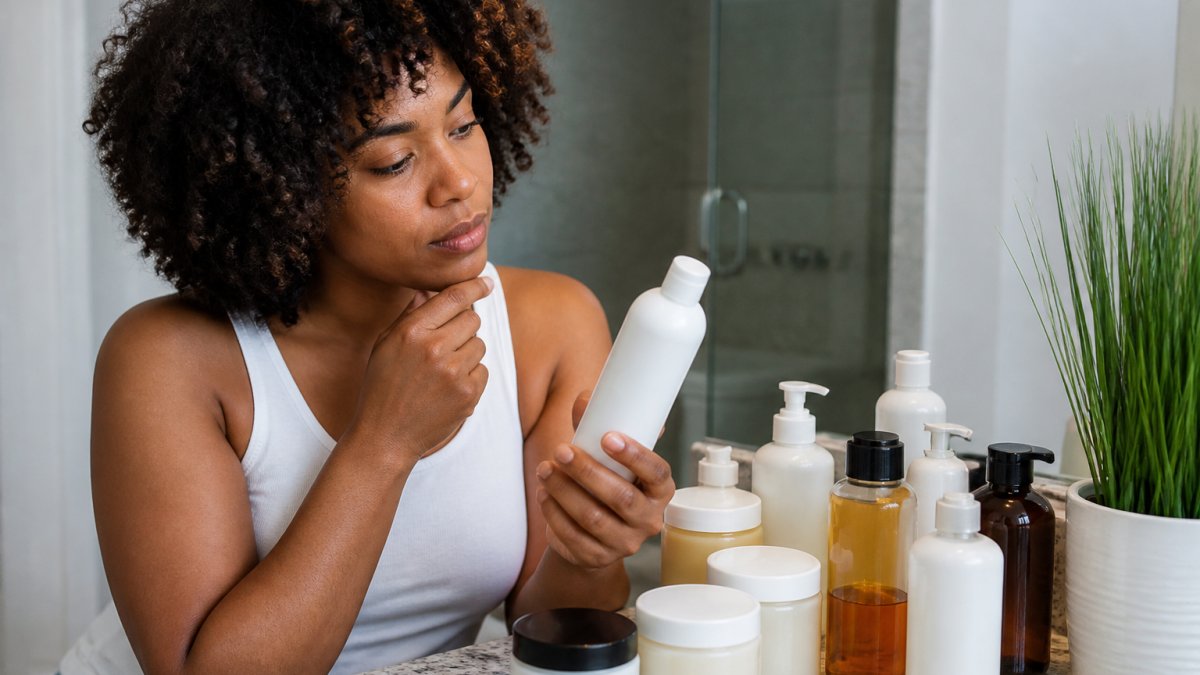
 how-to
How to Find Products for Mixed Hair: A Practical Guide
Table of Contents
- Start With Your Hair, Not the Product Aisle
- How Mixed Hair Porosity Changes What You Buy
- Building a Mixed Hair Care Routine That Sticks
- Choosing a Curl Cream for Mixed Hair
- How to Test Best Products for Mixed Hair One at a Time
- Budget, Label Literacy, and Ingredient Watch-Outs
- Frequently Asked Questions
Last Updated: October 15, 2026
Start With Your Hair, Not the Product Aisle
Most people learn how to find products for mixed hair the hard way: buying whatever a stranger on the internet swore by, then watching their hair feel worse.
At Hair Naturally Beauty Supply, we hear one question constantly: which products actually work for 4A, 4B, and 4C hair? The product matters less than the match. A cream that transforms one person's curls can weigh down another's, so learn to read your own hair first.
Why Mixed Hair Needs Its Own Approach
Mixed hair often combines looser waves with tight coils in different zones. That means one product can behave two ways on the same head. The American Academy of Dermatology's hair care guidance notes that curly and coily hair naturally loses moisture faster because oils struggle to travel down the hair shaft. So moisture retention, not styling, is the real goal.
Reading Your Curl Pattern and Texture
Curl pattern describes strand shape; texture describes strand thickness. You need both.
- Type 3 (curly): springy loops, often finer and easier to hydrate
- Type 4A: tight, defined coils about the width of a coffee stirrer
- Type 4B: sharper zigzag coils with less definition
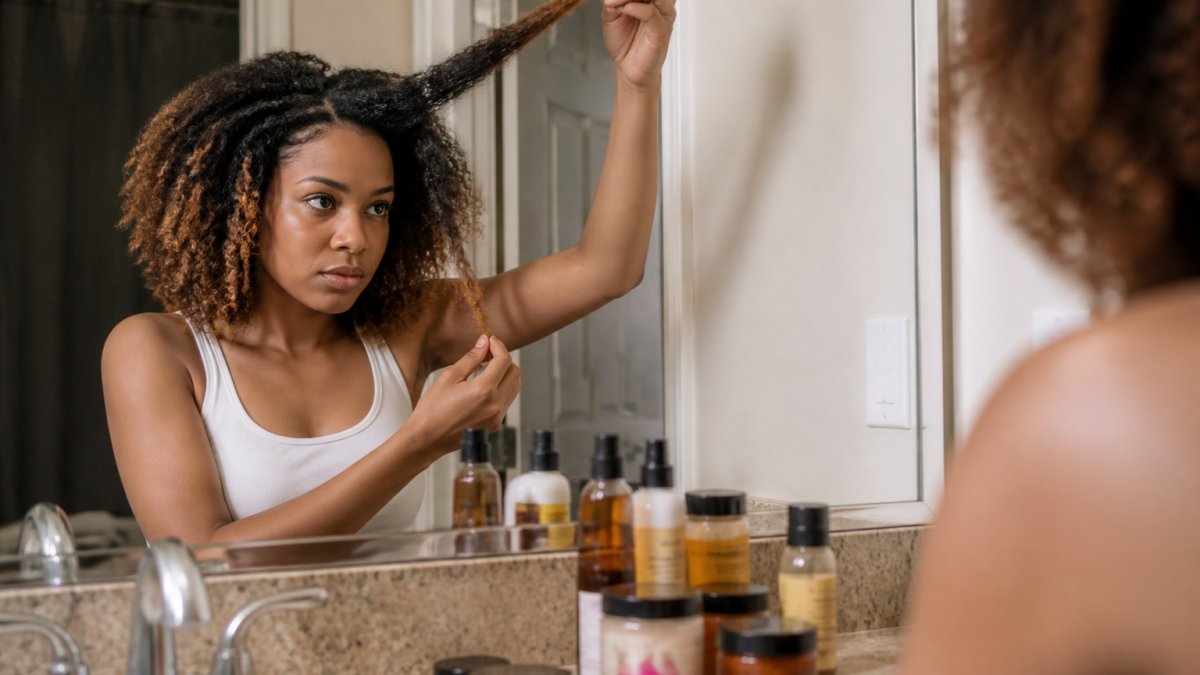
Most mixed heads are a mix, 3C at the crown, 4B at the edges. Write down what you see in each zone; that map decides everything that follows.
How Mixed Hair Porosity Changes What You Buy
Porosity is how well hair takes in and holds moisture, and it matters more than curl pattern when picking products. Low porosity hair has tightly closed cuticles, so products sit on top; high porosity hair has open cuticles, so moisture escapes fast.
The Float Test and Other Porosity Checks
Drop a clean strand of shed hair into a glass of water. Wait a few minutes.
- Floats on top: low porosity
- Sinks slowly: normal porosity
- Sinks fast: high porosity
You can also watch how your hair dries: hair that takes hours to get wet is low porosity, while hair that soaks instantly but dries fast is high porosity. A third check: run a finger up a wet strand from tip to root, bumpy means high porosity, glassy means low.
The Three-Trait Decision Guide: Porosity, Density, and Strand Thickness
Porosity alone does not tell you what to buy.
1. Porosity (how the cuticle behaves). Use the float test or wet-strand feel test above.
2. Density (strands per square inch). Part your hair in the middle: easy to see scalp means low density, barely visible means high.
3. Strand thickness (diameter of one strand). Roll a shed strand between your fingers: barely feel it means fine, like sewing thread means coarse.
What Each Combination Actually Means for Product Choice
- Low porosity + low density + fine strands: the lightest possible routine. Water-based leave-in, a milky or lotion-textured styler, and no butters. Heavy products will sit on the surface and flatten volume.
- Low porosity + high density + coarse strands: lightweight products but more of them. You can layer a water-based leave-in with a light gel because coarse strands tolerate more product without collapsing.
- High porosity + low density + fine strands: the trickiest combination. You need moisture sealed in, but heavy butters will weigh fine hair down. Look for lightweight emollients like grapeseed or sweet almond oil rather than shea or castor.
The practical takeaway: low porosity hair needs lightweight, water-based products and gentle heat to absorb; high porosity hair needs heavier creams and butters to seal moisture in. Density and strand thickness decide how much weight your hair can carry. Buying the wrong weight for your porosity is the most common reason a "miracle product" does nothing; the wrong amount is the second.
Building a Mixed Hair Care Routine That Sticks
A mixed hair care routine works when it repeats, not when it is complicated. Keep it to four steps in the same order every wash day.
Wash Day Order of Operations
- Pre-poo and detangle. Section dry hair and work through tangles with fingers first, then a wide-tooth comb.
- Cleanse the scalp. Use a gentle, sulfate-free shampoo and focus on the scalp, not the ends.
- Condition and detangle again. Apply conditioner, then comb through from ends to roots.
- Seal and style on damp hair. Add leave-in conditioner, then a curl cream or butter while hair is still wet.
For tighter 4B and 4C textures, shampooing every week or two is often enough, and co-washing between washes keeps moisture up without stripping. If your scalp itches or flakes, cleanse sooner rather than adding more product.
Choosing a Curl Cream for Mixed Hair
A curl cream for mixed hair should match porosity first, density and strand thickness second, and curl pattern third. Most guides invert that order and lead with curl type, which is why so many people buy creams that never work.
Match Cream Weight to Your Three Traits
Use the porosity, density, and thickness you identified earlier. The table below is a starting point, your own test results override it.
| Porosity | Density | Strand Thickness | Cream Weight | Example Ingredient Profile |
|---|---|---|---|---|
| Low | Low | Fine | Milky lotion | Water, glycerin, light oils (grapeseed, sweet almond) |
| Low | High | Coarse | Light cream | Water, glycerin, aloe, light oils |
| Normal | Any | Any | Medium cream | Water, shea butter, aloe |
| High | Low | Fine | Light cream with sealant | Water, light oil, small amount of shea |
| High | High | Coarse | Rich cream or butter | Shea butter, coconut oil, castor oil |
Apply creams to damp hair, not soaking wet, not fully dry, since damp hair absorbs better and holds definition longer. Start small, scrunch it in, and add more only where curls look fuzzy.
How to Read a Curl Cream Label in 30 Seconds
You do not need a chemistry degree, just scan the first five ingredients, where most of the formula lives.
- Water should be first in any leave-in or cream. If it is not, the product is closer to a butter or oil than a moisturizer.
- Watch for drying alcohols like denatured alcohol or SD alcohol high on the list. Fatty alcohols (cetyl, cetearyl, stearyl) are different and are fine, they are emollients, not drying agents.
- Silicones appear as ingredients ending in "-cone," "-siloxane," or "-conol." They are not inherently bad. They smooth the cuticle and reduce frizz. If you prefer to avoid them, scan for those suffixes.
A Budget-Tiered Approach
You do not need to spend a lot to build a routine that works. What matters is matching formula weight to your hair, not price to a brand.
- Entry tier: a gentle sulfate-free shampoo, a basic conditioner, and one water-based leave-in. This covers cleansing and moisture for most people.
- Mid tier: add a curl cream matched to your porosity and a lightweight gel for hold. This is where definition and frizz control come from.
- Upper tier: add a sealant oil or butter for high porosity hair, and a clarifying shampoo for monthly buildup removal. These are the two products most people skip and then wonder why their routine stopped working.
A useful rule: spend more on leave-on products (leave-in, cream, sealant) and less on rinse-offs (shampoo, conditioner), which have less time to affect your hair.
How to Tell If a Cream Is Actually Working
Give any new cream at least two wash days before judging it, checking four things:
- Moisture: does hair feel soft the next morning, or dry and rough?
- Definition: are curls clumped, or is the pattern fuzzy?
- Frizz: did frizz appear within hours, or hold off until day two or three?
- Scalp comfort: any itching, flaking, or tightness?
If moisture and definition improve without scalp irritation, the cream is a match. If hair feels coated, greasy, or stiff, the formula is too heavy or protein-rich, move one tier lighter. If hair feels dry within hours, it is too light, move one tier heavier or add a sealant.
How to Test Best Products for Mixed Hair One at a Time
Finding the best products for mixed hair means changing one thing at a time. Switch shampoo, conditioner, and cream in the same week and you learn nothing about what helped or hurt.
The Two-Week Single-Product Test
- Pick one new product. Keep everything else in your routine the same.
- Use it for two weeks. That is enough wash days to see a real pattern.
- Track four things: moisture, definition, frizz, and scalp comfort.
- Score each from 1 to 5. Write the scores down.
- Keep or cut. If the total improves, keep it. If not, stop using it.
- Wait one week. Let your hair settle before testing the next product.
This slow method feels tedious but saves money: you stop repurchasing products that never worked and build a routine you can trust.
The two-week single-product test is the fastest way to stop wasting money. Change one item, track four signs, and keep only what scores higher than before.
Budget, Label Literacy, and Ingredient Watch-Outs
You do not need a cabinet full of products to care for mixed hair. You need a few that fit your porosity, plus the skills to read a label.
Read the first five ingredients, where most of the formula lives.
A few ingredient notes worth knowing:
- Shea butter and coconut oil seal moisture well for high porosity hair.
- Glycerin draws in moisture but can frizz in very dry air.
- Sulfates strip natural oils, so many people with coily hair choose sulfate-free formulas.
If you have a sensitive scalp or a known allergy, patch test any new product on a small area first. The FDA's guidance on cosmetics and ingredient safety explains how to check labels and report a reaction.
This is where shopping gets easier. A store curated for 4A, 4B, and 4C textures removes the guesswork of a generic aisle.
Frequently Asked Questions
How do I figure out my curl pattern and hair porosity?
Wash and air-dry a small section without product. Compare the shape to curl charts: 3A-3C for looser curls, 4A-4C for tighter coils. For porosity, drop a clean strand into a glass of water. If it sinks quickly, you likely have high porosity. If it floats for a while, that points to low porosity. Most mixed hair falls somewhere in between, which means you need products that balance moisture without weighing curls down.
What is the best curl cream for mixed hair?
There is no single best curl cream. The right one depends on your porosity and density. High-porosity hair usually responds to thicker creams with shea butter or coconut oil that seal in moisture. Low-porosity hair does better with lighter, water-based creams that absorb without sitting on top of the strand. Look for silicone-free formulas if you want to avoid product buildup, and test one cream at a time so you can tell what is actually working.
How can I tell whether a product is moisturizing enough for my hair?
Apply the product to damp hair and check how your hair feels 24 to 48 hours later. If it still feels soft and flexible, the moisture is holding. If it feels dry, stiff, or straw-like by day two, the product is not delivering enough hydration for your porosity level. Pairing a leave-in conditioner with a curl cream often helps mixed hair retain moisture longer, especially on high-porosity strands.
How can I test a new hair product without buying a full-size bottle?
Buy travel sizes or sample packets when available. If those are not an option, use the product for two full wash cycles before adding anything else new. Take a photo of your hair on day one and day three so you can compare definition, moisture, and frizz honestly. This one-product-at-a-time method keeps you from guessing which item in your routine caused a reaction or a bad hair day.
Finding the right products for mixed hair takes patience, but it is not complicated. The challenge is that most advice ignores porosity, texture, and how the two interact on one head. We built Hair Naturally Beauty Supply to make that search simpler, with a curated range for coily and curly textures, fast shipping, and a focus on 4A, 4B, and 4C hair. Start with your hair, test one product at a time, and let the results guide you.