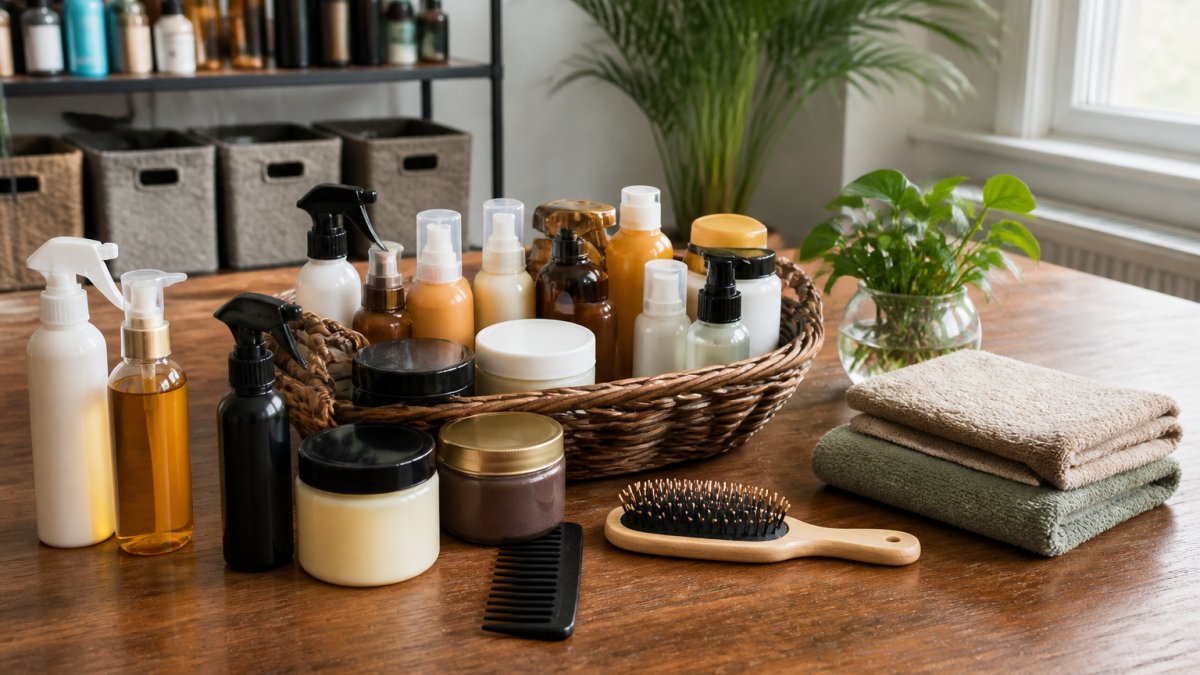
 comparison
How to Decide if Expensive Hair Care Is Worth It
Last Updated: November 1, 2026
Quick Summary
Expensive hair care is worth it only when the extra money buys better surfactants, pH balance, or stability testing rather than fragrance and packaging. Past a personal diminishing returns threshold, paying more stops improving results, so compare surfactant family, pH disclosure, and conditioning-agent position across price tiers before spending more.
- Price reflects research, marketing, distribution, and ingredients, but only research and ingredient sourcing can affect your hair.
- Healthy hair and scalp sit at roughly pH 4.5 to 5.5, and pH adjustment is a real place premium pricing can show up.
- Scan the first five shampoo ingredients, identify the surfactant family, then treat fragrance last.
- Stop stepping up when two price tiers share the same surfactant family, pH window, and conditioning-agent position.
- Low-porosity hair can let rich, heavy formulas sit on top and cause buildup, wasting a concentrated product.
Table of Contents
- Why Expensive Hair Care Is Not Automatically Better
- Expensive Shampoo vs Drugstore Shampoo: What the Label Tells You
- Hair Care Ingredients to Look For (and What You Can Skip)
- The Diminishing Returns Threshold: When Paying More Stops Helping
- Hair Porosity and Product Absorption: Why Your Hair Type Changes the Math
- Finding the Best Affordable Shampoo for Curly Hair
- Building an Affordable Hair Care Routine for 4C Hair
- Choosing Your Products at Hair Naturally Beauty Supply
- Frequently Asked Questions
Why Expensive Hair Care Is Not Automatically Better
A higher price tag does not guarantee better hair. Many people who spend a lot on premium bottles still end up with dry, brittle 4C coils. Price reflects many things; formulation quality is only one.
Cost and performance are not the same measurement. A costly product can be mostly fragrance and packaging; a modest one can carry the exact surfactants and emollients your hair needs.
Where the Price Actually Comes From
Four things drive the sticker price, and only one of them touches your hair.
- Research and development: Testing, stability work, and safety review cost money, the portion that can improve performance.
- Marketing and branding: Advertising, influencer seeding, and premium packaging are folded into the retail price. None of it changes what the product does.
- Distribution and retail markup: Shelf space, shipping, and middlemen add cost at every step.
Only the first and fourth can affect your results, which is why "expensive" and "effective" are separate questions.
Expensive Shampoo vs Drugstore Shampoo: What the Label Tells You
The expensive shampoo vs drugstore shampoo debate usually comes down to the ingredient list, not the price tag. Both tiers use water, surfactants, conditioning agents, preservatives, and fragrance.
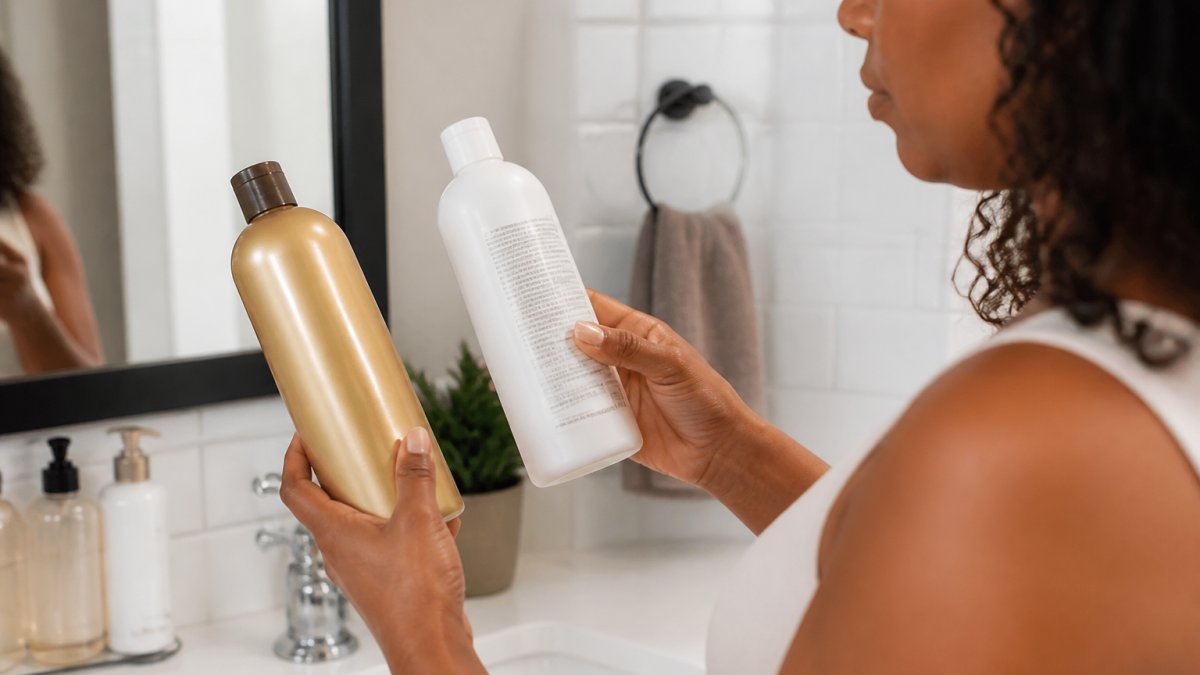
The surfactant system is where the money usually goes
Surfactants do the cleaning, and their identity matters more than the price of the bottle. The common ones fall into recognizable families:
- Sulfates: Sodium Laureth Sulfate (SLES) and Sodium Lauryl Sulfate (SLS) are effective, inexpensive cleansers. SLS is the harsher of the two and is more likely to strip a dry or sensitive scalp.
- Isethionates: Sodium Cocoyl Isethionate and Sodium Lauroyl Isethionate are milder, creamier cleansers that show up in many mid- and premium sulfate-free formulas.
- Glucosides: Coco-Glucoside and Decyl Glucoside are non-ionic, very gentle cleansers often used in low-foam or sensitive-scalp formulas.
A drugstore bottle can absolutely use an isethionate or glucoside system. What usually changes with price is the blend ratio, the secondary surfactant that boosts foam without raising irritation, and the conditioning agent left in so hair does not feel squeaky.
pH is the quiet variable
Healthy hair and scalp sit in a mildly acidic range, roughly pH 4.5 to 5.5. A well-formulated shampoo is buffered into that window so the cuticle lays flatter and the scalp barrier is not disrupted. pH adjustment adds cost and testing time, so it is one of the places a premium price can show up in performance rather than marketing.
Preservatives are a feature, not a flaw
Every water-based formula needs a preservative system, or it will grow mold and bacteria within weeks. Common systems include phenoxyethanol paired with ethylhexylglycerin, sodium benzoate with potassium sorbate, and the parabens that many brands now avoid for marketing reasons. A preservative on the label is normal and necessary. The real question is whether the system is broad-spectrum and whether the product has been challenge-tested, which brings us to a point most label guides skip.
Stability and shelf-life testing: the cost you cannot see on the label
Some manufacturers run accelerated stability tests, holding the formula at elevated temperatures to simulate years on a shelf, plus freeze-thaw cycling and preservative challenge tests, where the formula is deliberately inoculated with bacteria and mold to confirm the preservative holds.
This is one of the clearest places where expensive and cheap diverge in ways that affect you.
How to Read a Shampoo Ingredient Label
Reading a label is a skill, and it takes about two minutes once you know the order.
- Scan the first five ingredients. They make up most of the formula. Water is almost always first.
- Identify the surfactants. Look for names ending in "-sulfate," "-sulfonate," "-isethionate," "-glucoside," or "-glycinate." The family tells you how gentle the cleanser is likely to be.
- Check for conditioning agents. Emollients and humectants usually appear mid-list. Look for glycerin, panthenol, and fatty alcohols.
- Note the preservatives. A preservative system keeps the product safe; its presence is normal and necessary.
- Treat fragrance last. If fragrance sits high on the list, a chunk of the price is scent, not hair benefit.
A common mistake is assuming a longer ingredient list means a better product. A shorter list built around the right surfactants and humectants often does more for coily hair than a long list of trace botanicals. The label cannot tell you concentrations, but the order and surfactant family get you most of the way.
Hair Care Ingredients to Look For (and What You Can Skip)
The hair care ingredients to look for depend on your goal, but a few categories earn their place for textured hair. Humectants pull moisture toward the cuticle. Emollients seal it in.
What can you skip? Silicones can build up on low-porosity hair, and parabens are preservatives with a contested reputation. Whether an ingredient suits your porosity usually matters more than whether it is labeled synthetic or natural.
The Diminishing Returns Threshold: When Paying More Stops Helping
There is a point where each extra dollar buys less improvement: the diminishing returns threshold. Up to a certain price, you are often paying for better surfactants, more thoughtful pH balance, and higher concentrations of actives.
The threshold is not a fixed number, the plateau depends on your hair, your scalp, and what the formula is trying to do. To understand the mechanism behind the plateau, read Why Natural Hair Products Fail.
Why quality plateaus at all
Three forces create the ceiling:
- Ingredient cost curves flatten. The jump from a commodity sulfate to a mild isethionate is a real cost step. The jump from a good isethionate blend to a boutique one is a much smaller performance step for a much larger price step.
- The hair shaft has a limited number of binding sites. Conditioning agents, humectants, and proteins can only do so much before the surface is saturated. Additional concentration coats rather than absorbs, and on low-porosity hair that becomes buildup.
- Formulation trade-offs cap the upside. A formula that maximizes gentleness may clean less thoroughly; one that maximizes slip may weigh down fine hair. Premium formulas manage these trade-offs better, but they cannot eliminate them.
A four-step test for finding your threshold
- Baseline your current product. Note the surfactant family, the first conditioning agent, and whether the brand publishes a pH. This is your reference point.
- Step up one tier at a time. Compare a mid-priced bottle against your baseline using the same three data points. If the surfactant family is the same and the conditioning agent appears in the same position, the step-up is likely branding.
- Watch for the saturation signal. If a more expensive product leaves your hair feeling coated, weighed down, or greasy by day two, you have likely crossed your threshold, the formula is delivering more than your hair can absorb.
- Stop when the data stops changing. When two products at different price points share the same surfactant family, the same pH window, and the same conditioning-agent position, the more expensive one is buying you packaging and scent, not performance.
What the threshold looks like in practice
Someone with a sensitive scalp and color-treated hair may benefit from spending more on a gentle, well-buffered cleanser, because the mechanism (barrier protection) is real. Someone with healthy, high-porosity coils may hit the plateau earlier, because a formula that nails gentle cleansing and humectant delivery does not need to cost more.
Hair Porosity and Product Absorption: Why Your Hair Type Changes the Math
Hair porosity is how readily your strands absorb and hold moisture, and it changes whether an expensive product is worth it for you.
This is where the math shifts. A costly, concentrated formula may be wasted on low-porosity hair that cannot absorb it, while high-porosity hair may need the extra emollients a premium product provides.
Porosity changes whether a premium formula can actually deliver, so match the product to your strands before you match it to a price.
| Porosity | Cuticle behavior | What it means for products |
|---|---|---|
| Low porosity | Tight cuticle that resists absorption | Rich, heavy formulas can sit on top and cause buildup |
| High porosity | Raised cuticle that drinks in moisture but loses it fast | Benefits from layered emollients and lipid replenishment |
Finding the Best Affordable Shampoo for Curly Hair
The best affordable shampoo for curly hair cleans without stripping and matches your porosity. You do not need a luxury bottle to get a sulfate-free, pH-balanced cleanser, just check the surfactant type, confirm the formula is not overloaded with drying alcohols, and make sure it supports the moisture your curls need.
Curly and coily textures often do well with a gentle cleanser paired with a rich conditioner. You can browse the full Curly Hair Products collection to compare options. A single expensive shampoo rarely fixes hydration on its own.
Building an Affordable Hair Care Routine for 4C Hair
An affordable hair care routine for 4C hair follows a simple rhythm: cleanse, condition, moisturize, seal, and protect. The goal is moisture retention, and you can build it without premium pricing.
- Cleanse every one to two weeks with a gentle, sulfate-free shampoo.
- Deep condition regularly to support hydration levels and lipid replenishment.
- Moisturize with a water-based leave-in, then seal with an emollient to lock it in.
Consistency beats cost. A modest routine you actually keep up with will outperform an expensive one you use sporadically.
Choosing Your Products at Hair Naturally Beauty Supply
Deciding whether expensive hair care is worth it comes down to reading labels, knowing your porosity, and spending where it actually changes your results. Most people do not need the most expensive bottle on the shelf.
That is what we built Hair Naturally Beauty Supply around. As a Black-owned business, we curate quality, affordable products for 4A, 4B, and 4C hair, with fast shipping so your routine never stalls.
Frequently Asked Questions
Are expensive shampoos really better for your hair?
Not automatically. Price often reflects fragrance, packaging, and marketing as much as formulation. What matters is the ingredient list: sulfate-free surfactants, a balanced pH, and effective humectants and emollients. Pricing depends on the product, quantity and delivery; check Hair Naturally Beauty Supply's website for current prices. Match the formula to your porosity and scalp condition before you match it to a price tag.
Can affordable hair products work as well as salon brands?
Yes, when the formulation is sound. Ingredient lists are the most reliable place to compare products. For basic cleansing and hydration, an affordable shampoo for curly hair can perform well if you check for sulfate-free cleansing agents and avoid heavy silicones that build up on 4C coils.
Which hair care products are actually worth spending more on?
Spend on leave-in treatments, deep conditioners, and thermal protection, because those stay on the hair and their concentration and molecular weight determine how well they absorb. Save on rinse-out cleansers, where contact time is short. Hair care ingredients to look for when paying more include hydrolyzed proteins, humectants like glycerin, and lipid-rich emollients. A multi-benefit product that replaces several single-use products can sometimes cost less overall, depending on what you need.
How do I build an affordable hair care routine for 4C hair?
Start with three products: a sulfate-free cleanser, a water-based leave-in, and a sealing oil or butter. Cleanse every 7 to 10 days, apply leave-in to damp hair in sections, then seal with oil to slow moisture loss. Add a deep conditioner twice a month. This affordable hair care routine for 4C hair focuses on the real issue, which is hydration retention on tight coils rather than the brand name on the bottle.
The challenge is simple: stop guessing and start matching formulas to your hair. Hair Naturally Beauty Supply offers products curated specifically for coily, curly, and natural textures, a convenient online shopping experience, and fast shipping. Get started with Hair Naturally Beauty Supply and build a routine that delivers moisture without the premium markup.