 blog
How to Choose Between Sally Beauty and Local Black-Owned Stores
Last Updated: November 2, 2026
Quick Summary
Choose a national chain like Sally Beauty for one-stop convenience and broad staples, and choose a local Black-owned beauty supply store for texture expertise, depth in braiding hair and wigs, and community accountability. Verify ownership separately from sourcing, since carrying Black-owned brands does not make a store Black-owned.
- Verify ownership through the store's own statement, directories, a phone call, or public business registration.
- A Black-owned store stocks braiding hair in multiple lengths and colors, while a chain carries only a few brands.
- Chain wigs skew to synthetic units often under $50; specialist stores carry human-hair lace fronts into the hundreds.
- Bonnets, satin scarves, and edge brushes are usually cheaper and better stocked at Black-owned stores.
- Compare the exact same SKU on price, then weigh staff guidance and trip distance before buying.
Table of Contents
- Sally Beauty vs Local Black-Owned Stores: What Actually Differs
- Ownership, Sourcing, and What Each Model Means for You
- Side-by-Side Comparison: Products, Prices, and Service
- Sally Beauty Natural Hair Products: What the Chain Does Well
- Finding a Black-Owned Beauty Supply Store Near Me
- Braiding Hair and Wigs: Where Selection and Quality Diverge
- Shopping a Black-Owned Beauty Supply Online Store
- How Your Shopping Choice Affects Local Business and Community
- Choosing the Right Store for Your Hair and Your Values
- Frequently Asked Questions
Sally Beauty vs Local Black-Owned Stores: What Actually Differs
The choice between a national chain and a local Black-owned beauty supply store comes down to a question most shopping guides never ask: who owns the shelf, and who understands what goes on it.
The short answer: chains win on one-stop convenience and national buying power, while Black-owned stores win on texture expertise, community accountability, and product selection built around natural hair and protective styles.
Ownership, Sourcing, and What Each Model Means for You
The most common mistake shoppers make is treating "Black-owned" and "carries Black-owned brands" as the same thing. They are not, and the difference changes what your money supports.
Ownership: who answers for the store
Ownership determines who the store is accountable to. A national chain answers to corporate management and regional buyers; a local Black-owned shop answers to its neighborhood and its owner.
Ownership is also the fact most often assumed rather than verified. A store can sit in a Black neighborhood, stock Black-owned brands, and employ Black staff without being Black-owned.
Sourcing: what is actually on the shelf
Sourcing is a separate question: which brands does the store carry, and who makes them? A Black-owned store may carry legacy mass-market brands alongside Black-owned brands, and a chain may carry a handful of Black-owned brands too, often without staff who can explain them.
Buying from a Black-owned store supports Black business ownership directly. Buying a Black-owned brand from any retailer supports that brand's revenue, but not necessarily local ownership. Both can be worthwhile; they are not interchangeable.
How to verify ownership before you shop
Use a layered approach, and treat any single signal as a hint rather than proof.
- Check the store's own channels first. Look for an explicit statement, "Black-owned and operated", rather than inference from imagery.
- Cross-check directories. Use community-maintained lists to generate candidates, then confirm on the store's own channels.
- Call and ask. "Is this store Black-owned?" is a question reputable owners answer daily.
How to read a shelf for sourcing
Once you know who owns the store, look at what they stock.
Ask the owner or staff how they choose inventory. An owner who buys for the neighborhood will usually tell you which brands customers ask for and why they dropped ones that did not perform. That answer tells you more than any sign in the window.
What this means for your routine
Separate the two decisions. If your goal is to support Black business ownership, verify ownership and shop there. If your goal is to support Black-owned brands, check the label and buy that brand wherever you get the best value. If your goal is the best product for your texture, compare the specific SKU and the guidance you get.
Side-by-Side Comparison: Products, Prices, and Service
Most comparisons stop at "chain equals convenience, local equals community." That is true but not useful when you are deciding where to spend $40 on a braiding install. Here is a criterion-by-criterion breakdown.
Product selection: breadth versus depth
A national chain is built for breadth. Its shelves are organized around general-market categories, and the textured-hair section is one department among many. You can usually find a basic sulfate-free shampoo, a leave-in conditioner, and an edge-control gel in the same trip.
A local Black-owned beauty supply store is built for depth in the categories its customers buy most. The braiding-hair wall is the center of the store: pre-stretched options in multiple lengths, jumbo braid in the colors people actually request, and crochet and loc styles stocked alongside.
Representative products and price ranges
Prices move, and no honest comparison should quote a single number as if it were fixed. What you can compare is the structure of pricing on the items that matter most.
- Braiding hair. A chain carries a limited number of packs and may price a standard pack in the low single digits as a traffic driver, but selection is thin. A Black-owned store carries more brands and lengths, with pre-stretched packs commonly ranging from a few dollars to roughly $10-$15 depending on length and brand. Butterfly locs value packs are one example of the selection a specialist store stocks. The local advantage is buying the exact length and color in one trip instead of substituting.
- Wigs. Chain wig selection skews toward lower-priced synthetic everyday units, often under $50, with limited human-hair options. A specialist store or curated online Black-owned retailer carries a wider range, including human-hair lace fronts that run well into the hundreds. Compare cap construction, lace type, and density, not just the sticker.
- Hair care. On commodity staples, chains are often price-competitive because of volume buying. On texture-specific products, local stores frequently match or beat chain pricing because those turn over fastest. Compare the specific SKU.
Staff knowledge and service
This is the widest and most consistent gap. Chain staff are trained for general retail: locate the item, ring the sale, process the return.
Service differences also show up in the small things: whether the store will hold a popular length, order a color they do not stock, or let you feel the hair before you buy.
Convenience and availability
Chains generally offer more locations and consistent hours, while local stores typically have a narrower schedule. Online Black-owned retailers close that distance gap, but you trade same-day availability for shipping time.
How to run your own comparison in ten minutes
- Pick the one product your next style depends on, the braiding hair, the wig, the leave-in.
- Check the chain's app or site for in-store stock at your nearest location.
- Call the local Black-owned store and ask if they carry that exact brand, length, and color.
- Compare the same SKU on price, then weigh staff guidance and trip distance.
- Buy where the total cost, money, time, and re-dos, is lowest for that style.
Neither model wins across the board. The chain wins on breadth and hours; the local store wins on depth, texture expertise, and the odds that you leave with the right product the first time.
Here is how the two store types stack up on the criteria that matter most when you are deciding where to spend.
| Criterion | National Chain | Local Black-Owned Store |
|---|---|---|
| Product selection | Breadth across general-market categories | Depth in braiding hair, wigs, texture care |
| Braiding hair | Three or four brands, handful of lengths | Pre-stretched in multiple lengths and requested colors |
| Wigs | Lower-priced synthetic everyday units, often under $50 | Wider range, including human-hair lace fronts into the hundreds |
| Hair care pricing | Often price-competitive on commodity staples | Frequently match or beat chain pricing on texture-specific products |
| Tools and accessories | Less stocked | Bonnets, satin scarves, edge brushes usually cheaper and better stocked |
| Staff knowledge | General retail training; texture knowledge is individual | Staff hired from the customer base, can advise on 4A, 4B, 4C |
| Convenience | More locations and consistent hours | Narrower schedule; online stores trade same-day for shipping |
Sally Beauty Natural Hair Products: What the Chain Does Well
Credit where it is due: national chains have expanded their selections. Sally Beauty carries hair care lines for coily textures, and its size usually means basic shampoo, conditioner, or styling gel is easy to find on short notice.
Where it thins out is depth. A common mistake is buying a "curl" product formulated for looser textures and wondering why it sits on top of your hair instead of absorbing.
Finding a Black-Owned Beauty Supply Store Near Me
Confirm ownership before you make the trip to any local store.
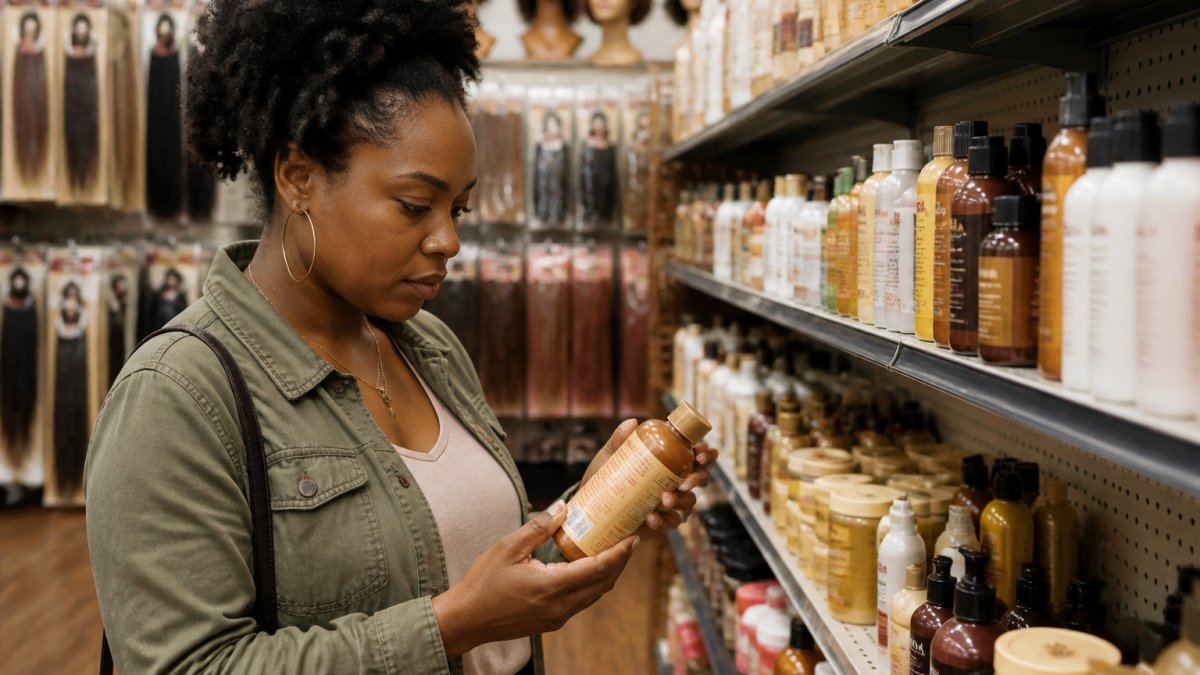
- Check the store's own website or social pages for an explicit ownership statement.
- Look for local business directories and community lists that vet Black-owned businesses.
- Call ahead and ask directly; reputable owners answer this question daily.
The U.S. Small Business Administration publishes resources on supporting local businesses, which can help you understand why ownership matters. Verify rather than assume, and you will waste fewer trips.
Braiding Hair and Wigs: Where Selection and Quality Diverge
Braiding hair and wigs are where the two models diverge most. Selection for braiding hair and wigs often differs between national chains and specialist stores. For anyone doing protective styles regularly, that depth matters.
Quality varies by brand, not by store type. Readers can browse a Jamaican bounce braiding hair option to compare. The advantage of a specialist is that staff, or a product page, can tell you which option suits your hair styling plan.
Shopping a Black-Owned Beauty Supply Online Store
Online shopping removes the biggest friction of supporting local: distance.
When you shop online, check shipping speed, return terms, and whether the product photos match the description. Look for stores that show real product images and state their return policy clearly.
For a practical walkthrough of ordering and fast delivery, see our guide to quick shipping beauty supply for natural hair.
How Your Shopping Choice Affects Local Business and Community
Money spent at a Black-owned store supports a local business owner.
This is where entrepreneurship enters the picture. Black-owned shops are small businesses that compete with larger retailers. Buying from one votes for that business ownership model to keep existing.
That does not mean guilt-tripping yourself over a chain run. It means being intentional: use the chain for convenience when it fits, and put your beauty retail dollars where texture expertise and community matter most to you.
Choosing the Right Store for Your Hair and Your Values
There is no single winner in the Sally Beauty vs local Black-owned stores question. Match the store to the task:
- Need one staple fast? A nearby chain is fine.
- Planning a protective style or braiding install? A specialist with real depth wins.
- Want texture-specific guidance? Go where the staff or product pages explain 4A, 4B, and 4C needs.
At Hair Naturally Beauty Supply, we built our catalog around coily, curly, and natural textures because we know a general shelf rarely covers them well. Our focus is 4A, 4B, and 4C hair, our selection spans braiding hair, wigs, hair care, and styling tools, and we ship fast anywhere in the US. If you have been weighing a chain run against a Black-owned shop, start with us and see the difference a curated shelf makes.
Frequently Asked Questions
What is the difference between Sally Beauty and a Black-owned beauty supply store?
The biggest difference is ownership and curation. Sally Beauty is a national chain. A Black-owned beauty supply store is independently owned, and its shelves are usually chosen by someone who stocks for textured hair first rather than as one category among many. That often means deeper selection in 4A, 4B, and 4C products, braiding hair, and wigs, plus staff who can recommend based on your hair type instead of a script.
Do Black-owned beauty supply stores carry products for 4A, 4B, and 4C hair?
Yes, and that is usually the point. A Black-owned beauty supply store tends to stock moisture-retention creams, leave-ins, gels, and oils formulated for coily textures as core inventory, not a small side section. Selection varies by store, so call ahead or check the online catalog for your specific hair type. If you have mixed textures, ask whether the store carries products that work across 3C to 4C so you are not buying two separate routines.
Are products at local Black-owned beauty supply stores more expensive than at Sally Beauty?
Not necessarily. Chain stores can discount nationally because they buy in volume, but local stores often price competitively on the items they specialize in, especially braiding hair and wigs. The fair comparison is total cost: a product that actually works for 4C hair saves you from replacing a cheaper one that did not. Compare the same item or the closest equivalent, factor in shipping if you shop online, and check whether the store offers bundles or loyalty perks.
How can I find and verify a Black-owned beauty supply store near me?
Start with directories that specifically list Black-owned businesses, then confirm ownership on the store's own website or social pages, where owners usually state it directly. Read recent reviews for mentions of ownership and service, and check whether the store names its owner publicly. Before a trip, call to confirm hours and ask about stock for your hair type. If you shop online, verify the business address and return policy so you know who you are buying from.
The real challenge is not finding products; it is finding a store that stocks for your texture and explains what it sells. Hair Naturally Beauty Supply is a Black-owned online destination built for 4A, 4B, and 4C hair, with curated braiding hair and wigs, specialized hair care, and fast shipping across the US. Get started with Hair Naturally Beauty Supply and shop a shelf made for your hair.