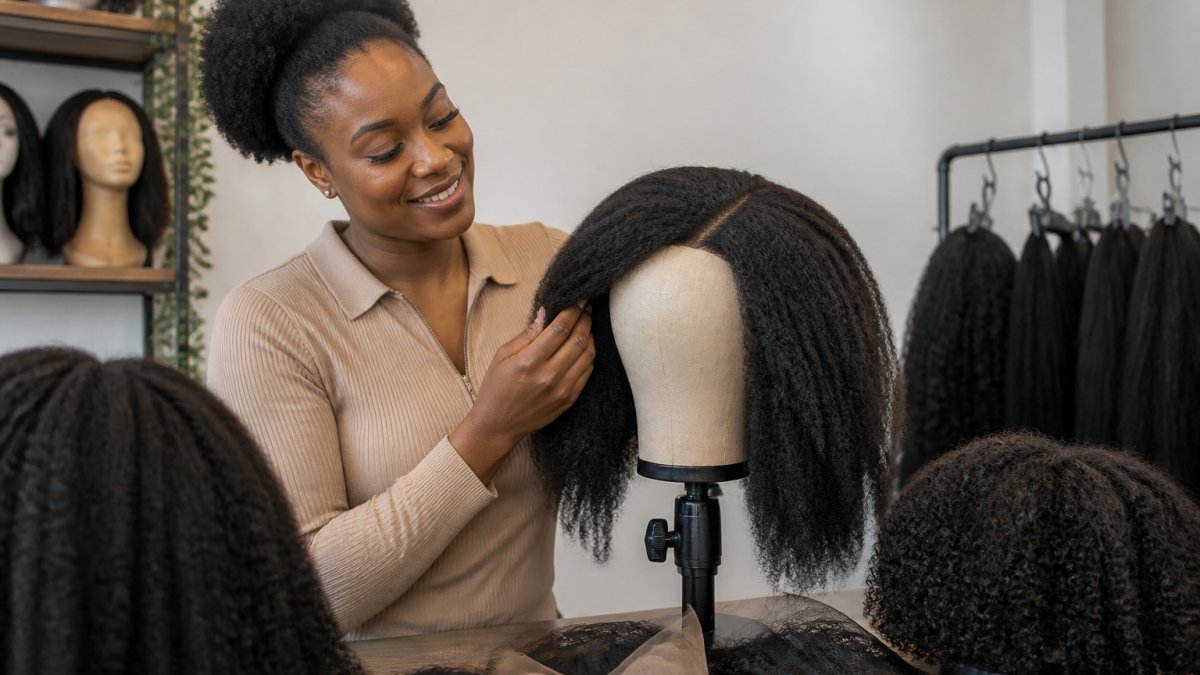
 how-to
How to Choose Wigs for 4C Hair: A 2026 Guide
Table of Contents
- What You'll Need Before You Shop for a 4C Wig
- How to Choose Wigs for 4C Hair: Cap Size, Texture, and Construction
- Human Hair vs. Synthetic: Which Holds Up on 4C Hair
- Protective Styles for 4C Hair Under Wigs
- How to Blend Leave-Out with 4C Wigs
- 4C Hair Wig Maintenance Tips That Extend Wear
- Common Mistakes to Avoid When Buying a Wig for 4C Hair
- Frequently Asked Questions
Last Updated: October 2, 2026
What You'll Need Before You Shop for a 4C Wig
Shopping for wigs for 4c hair goes wrong when you skip the prep. Before you buy anything, you need three numbers: your head circumference, your ear-to-ear measurement, and your nape-to-crown measurement. Grab a soft tape measure and a friend. Doing this alone leads to errors.
We hear the same story from customers. They bought a wig that slipped, itched, or flattened their coils, and now they're wary of trying again. The fix starts before checkout.
Here's what to gather first:
- A soft measuring tape
- Your head measurements in inches
- A photo of your natural coil pattern
- Your leave-out length, if you plan to blend
- A note on how you'll secure the wig
The U.S. Food and Drug Administration's cosmetic safety guidance reminds shoppers that products touching the scalp fall under cosmetic rules. That matters when you pick adhesives and glues.
How to Choose Wigs for 4C Hair: Cap Size, Texture, and Construction
Learning how to choose wigs for 4c hair comes down to three things: cap size, texture match, and construction type. Get these right and the wig looks natural. Get them wrong and no amount of styling will save it.
Most wig brands build caps for average heads. If your circumference falls outside the middle range, you need a custom or adjustable cap. A loose cap slides back and exposes your hairline.
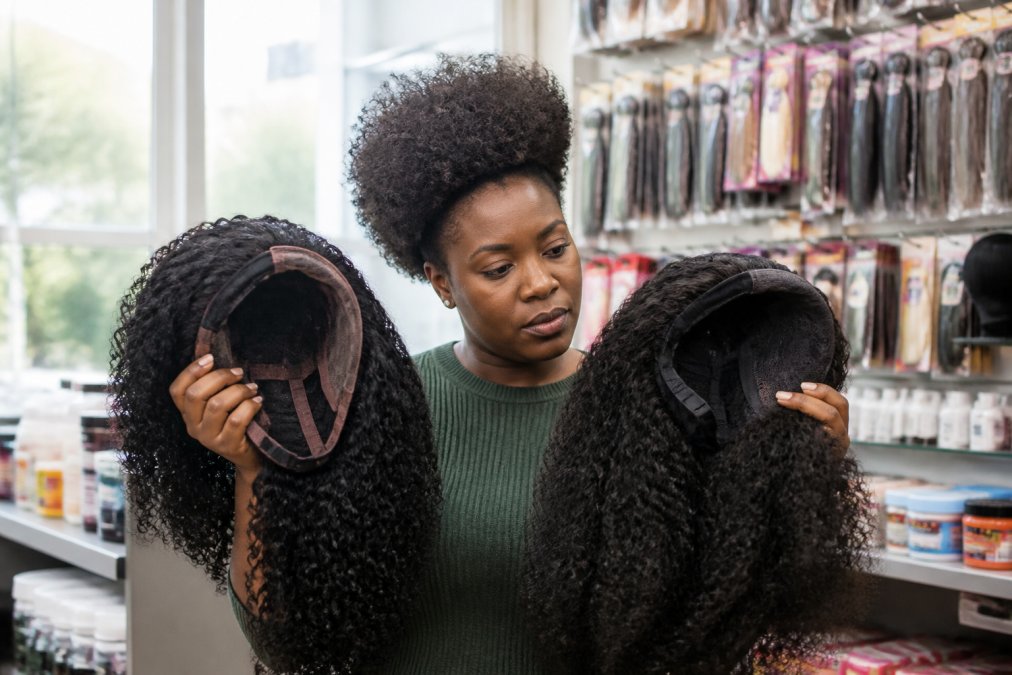
Matching Texture and Density to 4C Coils
4C hair has a tight, Z-shaped coil pattern with less natural shine. A silky-straight wig next to your leave-out looks obvious. Pick a kinky, coily, or kinky-straight texture instead.
Density matters too. A 180% density unit mimics the fullness most 4C wearers have. Go lighter for a natural look. Go heavier for drama.
Lace, Closure, and Cap Construction Explained
Lace front wigs cover the hairline with a sheer mesh that blends into skin. Closure wigs use a small lace or silk piece at the part. Full lace covers the whole cap.
For 4C hair, a lace front or closure gives the most natural part. A basic capless wig works for beginners on a budget.
Human Hair vs. Synthetic: Which Holds Up on 4C Hair
Human hair wins for 4C wearers who want heat styling and long wear. Synthetic costs less and holds a style out of the box, but it can't take high heat. It also tangles faster against coily leave-out.
A common mistake is buying cheap synthetic to "test" wigs. The texture clash with 4C hair usually kills the look within a week.
Protective Styles for 4C Hair Under Wigs
The best protective styles for 4c hair under wigs keep your ends tucked and moisturized. Cornrows flat against the scalp form the base. Flat twists work too.
Avoid tight braids. They pull at the hairline and cause traction damage over time (the American Academy of Dermatology).
A simple routine:
- Wash and deep condition your hair
- Apply a leave-in and seal with oil
- Braid in flat cornrows
- Cover with a wig cap
- Put on the wig
The American Academy of Dermatology's hair care resources notes that tight styles can lead to hair loss. Give your scalp a break between installs.
How to Blend Leave-Out with 4C Wigs
Blending leave-out with 4c wigs takes the right texture and a little product. Leave a small section of your own hair out at the front. Match it to the wig texture as closely as possible.
Then:
- Apply a light gel or edge control
- Twist or finger-coil the leave-out
- Let it set, then fluff gently
- Blend with a soft brush
If the textures still don't match, use a curling wand on low heat. Keep it minimal to protect your coils.
4C Hair Wig Maintenance Tips That Extend Wear
Good 4c hair wig maintenance tips add months to a unit's life. Wash your wig every 8-10 wears with a sulfate-free shampoo. Condition after every wash.
Store the wig on a stand, not in a bag. Tangles form when hair sits crushed.
Other habits that help:
- Detangle before washing
- Air dry on a stand
- Use a satin bonnet at night
- Rotate two wigs to reduce wear
Common Mistakes to Avoid When Buying a Wig for 4C Hair
The biggest mistake is buying for looks alone. A gorgeous unit that doesn't match your coils or cap size will sit in the box. Measure first, then shop.
Other common errors:
- Choosing a density too thin for 4C volume
- Skipping the leave-out texture match
- Using heavy glue on a sensitive scalp
- Ignoring cap construction for your experience level
- Buying without checking the return policy
Frequently Asked Questions
What is a 4C texture wig and how is it different from a regular wig?
A 4C texture wig is built with a curl pattern that mimics type 4C coils, tight, densely packed, and often with a natural sheen rather than a silky finish. Regular wigs usually come in straight, wavy, or looser curly textures that clash with 4C leave-out. When you choose wigs for 4C hair, look for kinky straight, kinky curly, or afro kinky textures so the wig blends with your own hairline instead of sitting on top of it like a separate piece.
Are human hair wigs better for 4C hair types?
Human hair wigs cost more but last longer, take heat and color, and match 4C textures more convincingly. Synthetic wigs hold their curl pattern with less styling and cost less upfront, but they tangle faster against coily leave-out and cannot be heat-styled. For daily wear, human hair usually wins on longevity. For occasional wear or trying a new look, a quality synthetic is a reasonable starting point. Either way, check the cap construction before you buy.
How do I protect my 4C hair under a wig?
Cornrow your hair flat in a pattern that distributes tension evenly, moisturize the scalp with a lightweight oil or leave-in, and cover your braids with a satin cap or wig liner before putting the wig on. Take the wig off at night. Re-moisturize every two to three days. Never braid so tight that your edges pull, and give your hair a break between installs. Protective styles for 4C hair under wigs work only when the foundation underneath stays clean and conditioned.
How do I choose the right wig cap size for natural hair?
Measure your head circumference at the hairline, from your front hairline around to the nape and back. Most wigs come in small, medium, and large. If you have thick 4C hair that you cornrow underneath, size up or look for adjustable straps and combs. A cap that fits too tight causes headaches and tension at the edges. A cap that fits too loose slides and exposes your leave-out. Adjustable caps and elastic bands give you room to fine-tune the fit.
Finding a wig that respects your coils and your scalp shouldn't feel like a gamble. Hair Naturally Beauty Supply is a Black-owned shop built for 4A, 4B, and 4C hair, with wigs, braiding hair, and care products curated for textured hair and shipped fast. Browse the collection and find a unit that fits your hair and your life. Shop Now.