 listicle
Buy Quality Wigs for 4C Hair: Top Picks
Table of Contents
- What to Look for When Buying Quality Wigs for 4C Hair
- Top Afro Kinky Curly Wigs for 4C Hair
- Quick Comparison: Wig Features and Fit
- How to Care for a Natural Hair Wig
- How to Style a Wig for 4C Hair
- How to Verify Wig Quality and Avoid Common Mistakes
- Which Wig Should You Choose?
- Frequently Asked Questions
Last Updated: October 11, 2026
What to Look for When Buying Quality Wigs for 4C Hair
When you buy quality wigs for 4C hair, you're investing in a product that respects your texture, maintains realistic edges, and lasts through proper care. Hair Naturally Beauty Supply breaks down the key factors that determine whether a wig will look natural, feel comfortable, and hold up over time.
A good wig purchase depends on three core decisions: hair material, construction type, and realistic details. Below we break down each factor to help you match your lifestyle and budget.
Hair Material: Human Hair vs. Synthetic
Human hair wigs can be heat-styled, colored, and bleached like natural hair. They hold curls longer and develop a natural appearance over time. Remy human hair, where cuticles face the same direction, resists tangling better than non-Remy.
Synthetic wigs come pre-styled and require minimal maintenance, wash, air-dry, and they return to their original curl pattern. They're more affordable upfront and resist frizz in humidity. The limitation: you cannot heat-style them, and poor-quality fibers can look plastic.
For 4C hair specifically, human hair wigs give you the most control over texture matching and styling.
Realistic 4C Wigs: Hairline, Edges, and Density
A realistic hairline and edges separate a wig that blends from one that screams "wig." For 4C hair, a flat, synthetic-looking hairline stands out immediately.
Look for wigs with pre-plucked, hand-tied hairlines that create the illusion of individual hairs growing from the scalp. Baby hairs should match your natural 4C texture, not appear thin and straight. A transparent or HD lace front allows your skin tone to show through for an undetectable hairline.
Density refers to how much hair is packed into the wig cap. For 4C hair, 180-200% density creates a full, voluminous look. Lower densities (120-150%) can look thin.
Cap Construction and Comfort
Lace-front wigs have a sheer lace panel across the front for a realistic hairline but require glue or adhesive for secure wear.
Glueless wigs use adjustable straps and combs to stay in place without adhesive. They're faster to put on and remove but may not be as secure for extended wear.
V-part and thin V-part wigs eliminate the need for a leave-out by using a V-shaped section at the crown, allowing you to part your wig without showing the cap.
Prioritize caps with breathable materials and ventilation to prevent scalp irritation and hair loss.
Top Afro Kinky Curly Wigs for 4C Hair
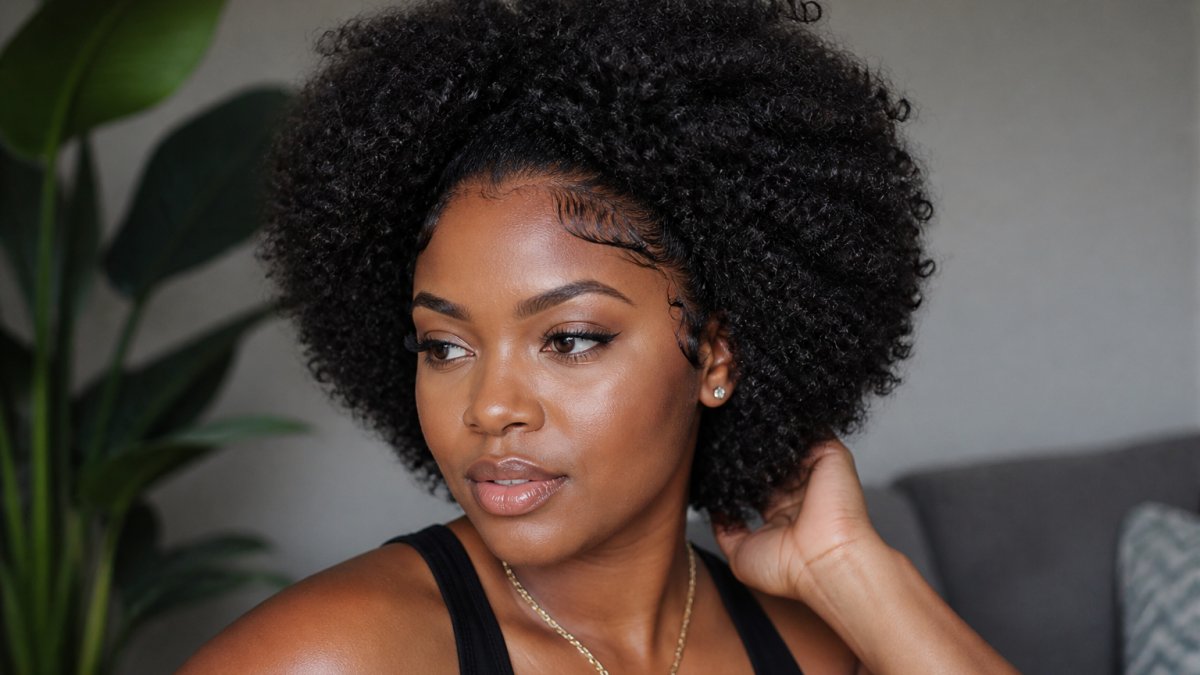
SPOU Wear and Go Kinky Curly Human Hair Glueless Wig
This glueless option combines no-adhesive wear with authentic kinky curly texture. The 7x6 HD transparent lace front creates a realistic hairline that blends with 4C edges and arrives ready to wear.
At 200% density and 20-inch length, it provides fullness without adhesive removal hassle. The transparent lace allows your skin tone to show through.
Best for: People who want a ready-to-wear wig without the commitment of glue, and those with smaller head sizes who prefer secure strap-and-comb construction.
What to watch: Glueless wigs may shift during high-activity wear. Test the fit before committing to all-day outdoor activities.
FACMOOD 4C Edges Kinky Curly Lace Front Wigs
This lace-front wig is 100% Brazilian human hair with transparent lace and pre-plucked hairline. The 4C edges blend with most natural hair textures and allow heat-styling and color customization.
Brazilian hair holds curls longer and resists frizz better in humidity. The pre-plucked design saves installation prep time.
Best for: Customers who want styling flexibility and plan to wear the wig long-term with proper maintenance.
What to watch: Human hair requires regular conditioning to prevent dryness and matting. Budget time for weekly or bi-weekly washing and deep conditioning.
Hermosa Hair Collections: Half Braided and Popping Curly
Hermosa Hair's 4C-focused collection includes half-braided styles (protective braids with loose curly sections) and popping curly textures (voluminous, defined 4C curls requiring minimal styling).
These collections deliver realistic texture matching with prioritized density and edge detail.
Best for: People seeking protective style versatility and those who want multiple styling options within one wig collection.
What to watch: Verify the hair material and construction type on the Hermosa Hair website, as their collections span both human and synthetic options.
Quick Comparison: Wig Features and Fit
| Wig Type | Hair Material | Best For | Construction | Maintenance |
|---|---|---|---|---|
| SPOU Glueless | Human hair | Quick wear, no adhesive | 7x6 HD lace front, glueless | Wash weekly, condition regularly |
| FACMOOD Lace Front | 100% Brazilian human hair | Heat styling, customization | Transparent lace, pre-plucked | Deep condition bi-weekly, avoid daily heat |
| Hermosa Half Braided | Varies (verify) | Protective styling, versatility | Braided + curly hybrid | Depends on material; check product specs |
| Hermosa Popping Curly | Varies (verify) | Volume and curl definition | Textured construction | Depends on material; check product specs |
How to Care for a Natural Hair Wig
Proper care extends your wig's lifespan and keeps it looking fresh. Whether you've chosen human or synthetic, the maintenance routine differs significantly.
Washing and Conditioning Your Wig
For human hair wigs, wash every 7-10 days with sulfate-free shampoo and lukewarm water. Hot water damages hair and loosens knots. Apply shampoo gently from roots downward without rubbing or twisting.
Conditioning is essential for human hair wigs, especially those made from coarser textures like Brazilian or Remy hair. Apply a deep conditioner after shampooing and leave it on for 10-15 minutes. This prevents dryness and matting, which are common issues with 4C-textured hair.
For synthetic wigs, wash every 2-3 weeks in cool water with a synthetic-specific shampoo. Avoid conditioner unless the wig is specifically designed to accept it, as most synthetic fibers don't absorb moisture the way human hair does.
Detangling and Storage
Detangle your wig while it's dry or slightly damp, starting from the ends and working upward. Use a wide-tooth comb or your fingers to gently separate tangles. For kinky curly wigs, this process requires patience, rushing will cause breakage.
Store your wig on a wig head or stand to maintain its shape and prevent matting. Keep it in a cool, dry place away from direct sunlight, which can fade the color and damage the fibers over time. If you're storing a wig for an extended period, place it in a breathable bag to protect it from dust while allowing air circulation.
How to Style a Wig for 4C Hair
Achieving a Natural Look with Realistic Edges
The key to a natural look is blending your wig with your natural hairline and edges. If you're wearing a lace-front wig, apply a thin layer of adhesive or wig glue along the hairline, then press the lace down firmly for 30 seconds.
For the edges, you have two options: wear them out for a blended look, or style them with your natural hair if you have a leave-out.
Customize the part: If your wig is glueless or V-part construction, you can move the part to match your natural hairline. This flexibility is one of the biggest advantages of quality wigs, they adapt to your preferences rather than forcing you into a preset style.
Heat Styling and Customization Options
Human hair wigs can be heat-styled, colored, and bleached just like natural hair. If you want to customize your wig, start with the lightest changes first. You can always go darker or curlier, but reversing damage is harder.
For curly wigs, avoid blow-drying on high heat, which can disrupt the curl pattern. Instead, use a diffuser attachment on low heat or air-dry completely. If you want to refresh the curls between washes, use a curl-activating spray or light mousse.
Synthetic wigs should never be heat-styled unless they're specifically labeled as heat-friendly. Heat will melt the fibers and ruin the wig permanently.
How to Verify Wig Quality and Avoid Common Mistakes
Not all wigs marketed as "4C" or "kinky curly" deliver on that promise. Here's how to verify quality before purchasing.
Check the hairline closely. Low-quality wigs have a thick, visible knot line where the hair is tied to the lace.
Verify the hair material. If a wig is labeled "human hair" but priced under $50, it's likely not genuine.
Look for realistic baby hairs. The hairs along the front should match your natural 4C texture, not appear as thin, straight strands.
Avoid overly perfect curls. Synthetic wigs with perfectly uniform curls can look plastic. Quality wigs have slight variation in curl size and definition, which makes them appear more natural.
Which Wig Should You Choose?
Your choice depends on three factors: budget, styling preferences, and wear frequency.
If you want minimal maintenance and fast wear, choose a synthetic glueless wig. You'll spend less upfront and avoid the weekly conditioning routine.
If you want styling flexibility and long-term durability, invest in a human hair lace-front wig.
If you want protective styling variety, look for collections like Hermosa Hair's that offer multiple textured options. This gives you versatility without purchasing multiple wigs.
At Hair Naturally Beauty Supply, we carry a curated selection of wigs specifically designed for 4C hair, with a focus on realistic edges and quality construction.
Buying quality wigs for 4C hair is an investment in your confidence and convenience.
Frequently Asked Questions
What wig texture looks most natural on 4C hair?
Kinky curly and afro-textured wigs match 4C hair most closely. Look for wigs labeled as 4C, kinky curly, or afro-kinky to ensure the curl pattern blends seamlessly with your natural edges and baby hair. Realistic hairlines with pre-plucked edges and HD transparent lace fronts create the most natural appearance. Avoid overly smooth or wavy textures, which won't match 4C's texture and may look mismatched when styled with your natural hair.
Should you choose a human-hair or synthetic wig for 4C hair?
Human-hair wigs offer better versatility for 4C hair because they can be heat-styled, colored, and customized to match your exact texture and color. Synthetic wigs are lower-maintenance and more affordable but offer limited styling options and may not blend as naturally with 4C edges. For the most realistic look and long-term value, human-hair wigs are the stronger choice, though quality synthetic options exist for budget-conscious shoppers.
How can you tell if a quality wig for 4C hair is actually good quality?
Check for these markers: human-hair construction (Brazilian, Peruvian, or Indian Remy hair is standard), density between 150-200%, realistic pre-plucked hairlines with baby hair detail, and transparent or HD lace that blends with skin tone. Read customer reviews specifically mentioning 4C texture matching and longevity. Avoid wigs with thin, sparse edges or stiff, unnatural curl patterns. Ask sellers about hair origin and whether the wig can withstand heat styling and washing without tangling or shedding.
What should you look for in a wig hairline for 4C hair?
Seek wigs with pre-plucked, realistic hairlines featuring baby-hair detail at the edges. HD transparent or medium-brown lace fronts blend better with darker skin tones than standard lace. The hairline should have irregular, natural-looking hair placement rather than a perfectly uniform line. Glueless or V-part designs allow you to leave out your own 4C edges for a seamless blend. A hairline that's too thick or uniform will look obviously fake, while thin, detailed edges create the illusion of natural growth.
How long do quality natural-hair wigs last?
Well-maintained human-hair wigs typically last 1-3 years with proper care. Lifespan depends on wear frequency, styling habits, and maintenance. Wigs worn daily may last 12-18 months, while occasional-wear wigs can last 2-3 years. Regular washing with sulfate-free products, gentle detangling, and proper storage extend longevity. Avoid excessive heat styling and chlorine exposure. Synthetic wigs last 6-12 months with regular wear. Investing in quality human-hair wigs for 4C hair often provides better long-term value despite higher upfront costs.