 listicle
Affordable Braiding Hair for Natural Hair: 2026 Guide
Table of Contents
- Quick Comparison: Affordable Braiding Hair Options
- Pre-Stretched Braiding Hair: The Queen B 7x Multipack
- Jamaican Bounce: Full Volume Under $7 a Pack
- Synthetic vs Human Hair for Braids
- Non-Toxic Braiding Hair Brands: What to Look For
- Cost-Per-Wear: What Affordable Braiding Hair Really Costs
- How to Choose Braiding Hair for Your Hair Type and Style
- Conclusion
- Frequently Asked Questions
Last Updated: September 23, 2026
Quick Comparison: Affordable Braiding Hair Options
Finding affordable braiding hair for natural hair doesn't mean settling for stiff, itchy fibers. At Hair Naturally Beauty Supply, we've seen how the right braiding hair protects 4A, 4B, and 4C textures without draining your wallet.
Two options stand out for value and quality. Here's how they compare:
| Product | Price | Packs for Full Head | Key Features | Best For |
|---|---|---|---|---|
| Queen B 50" Pre-Stretched 7x Multipack | $10.43 | 1 pack | Pre-stretched, pre-layered, itch-free, hot water setting | Knotless and boho braids |
| Jamaican Bounce Synthetic | $6.95 | 3-4 packs | Soft touch, easy to separate, full volume | Traditional box braids |
The Queen B multipack wins on convenience, one pack covers a full install. Jamaican Bounce wins on upfront price.

Pre-Stretched Braiding Hair: The Queen B 7x Multipack
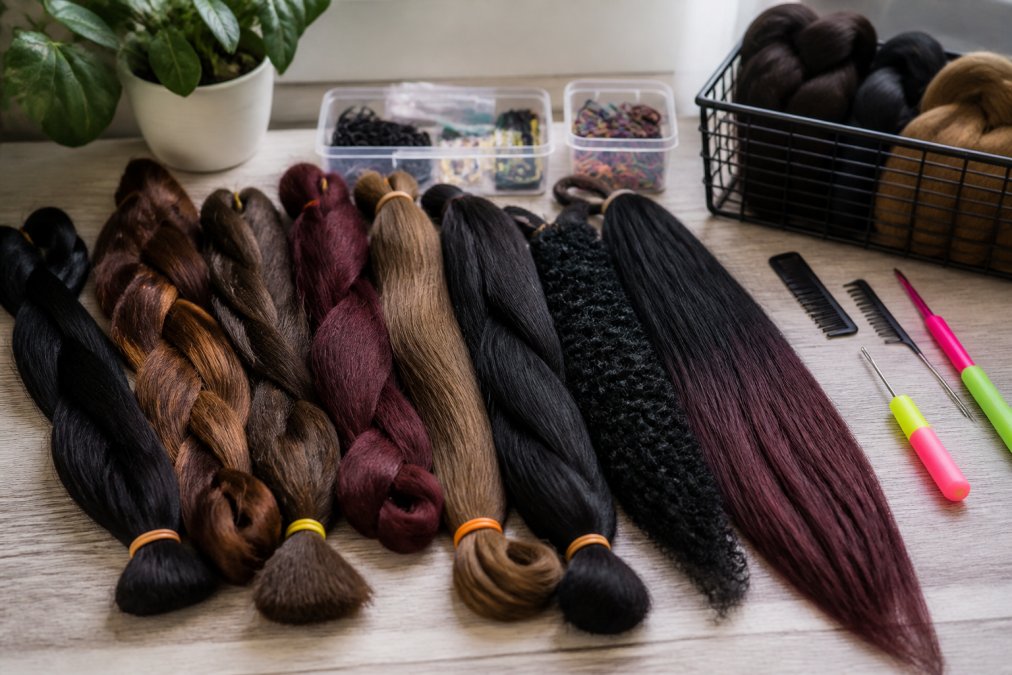
Pre-stretched braiding hair is synthetic fiber already pulled and separated during manufacturing, so you skip the tedious prep work. The Queen B 50" Pre-Stretched 7x Multipack costs $10.43 and covers a full head from one pack.
That single-pack math matters. Buying four or five packs out of habit leaves half sitting unused in a drawer. The Queen B multipack is pre-layered for a natural finish.
Jamaican Bounce: Full Volume Under $7 a Pack
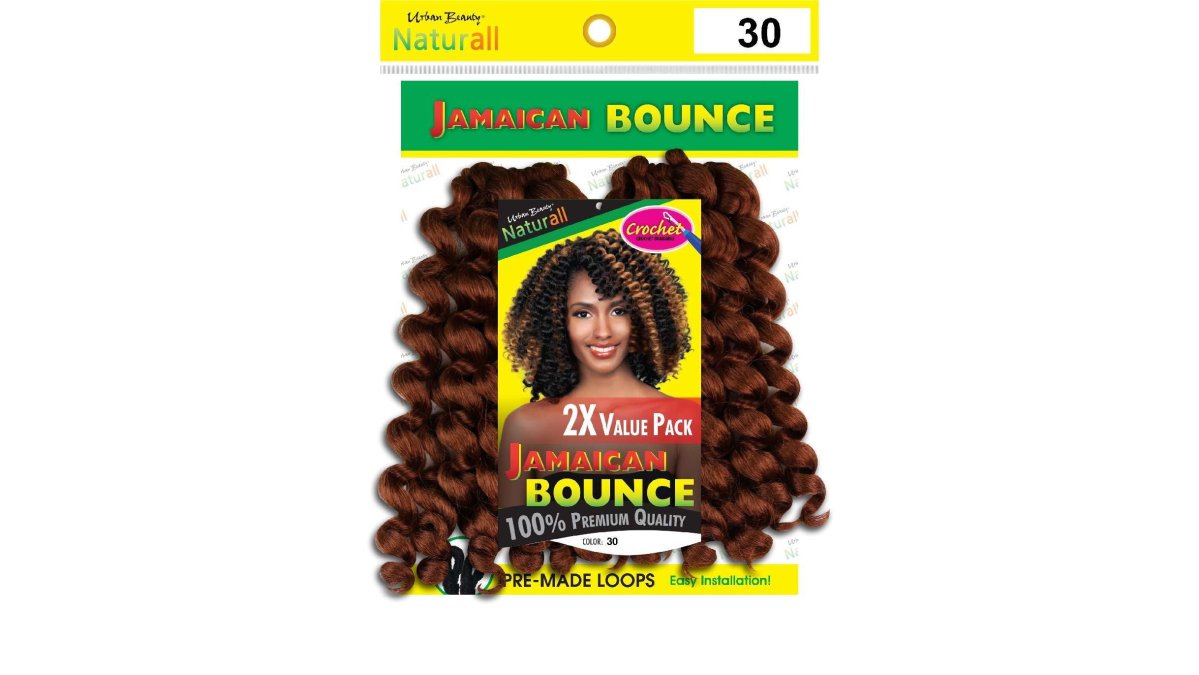
Full volume doesn't require a premium price. Jamaican Bounce synthetic braiding hair starts at $6.95 per pack, and most people need three to four packs per install.

Synthetic vs Human Hair for Braids
Synthetic fibers cost far less per pack, hold shape in humidity, take a hot water setting for sealed ends, and stay lightweight to reduce scalp tension. The tradeoff: shorter lifespan and no high-heat styling.

Non-Toxic Braiding Hair Brands: What to Look For
Non-toxic braiding hair avoids the harsh chemical treatments and residual processing agents that trigger scalp irritation during long wear. The label tells you more than the marketing, if you know what the fiber is made of and what was done to it.
Know the fiber before you read the label
Most affordable braiding hair falls into one of three fiber categories, and the category drives how it behaves against your scalp:
- Kanekalon, the traditional modacrylic fiber behind most box braids. Durable and heat-tolerant, but standard versions carry a flame-retardant finish some scalps react to. Try "kanekalon-free" or "low-shed" versions if you've reacted before.
- Toyokalon, a softer, lighter modacrylic with a more natural texture. Less stiff than kanekalon, so less friction at the root and less tension on fragile edges.
- Pre-stretched and pre-layered blends, fiber pulled and separated during manufacturing. Factory prep means less mechanical stress and less shedding, so fewer loose strands work into your scalp.
The irritants that actually cause reactions
Scalp irritation rarely comes from the fiber itself, it comes from what's left on it:
- Alkaline processing residue, leftover from the chemical bath used to texturize and set the fiber. It causes the sharp "chemical smell" on opening a fresh pack and is the most common trigger for itching and flaking.
- Flame-retardant coatings, required for many synthetic fibers sold in the U.S. under flammability rules. A safety feature, but it sits against your scalp for weeks.
- Dyes and colorants, fashion colors (burgundy, highlighted blends) carry more dye load than natural black or dark brown, so sensitive scalps do better starting with natural tones.
- Loose shed fibers, not chemical, but mechanically abrasive. Stiff, poorly separated fiber sheds short strands that work into the hairline and cause micro-irritation over a six-week wear.
What to look for on the package
- "Itch-free" labeling, usually means the fiber was washed or treated to reduce residual processing agents. Not regulated, so treat it as a starting signal, not a guarantee.
- "Pre-stretched" or "pre-layered", reduces shed and installation friction, indirectly protecting the scalp.
- Soft, light hand-feel, stiff fiber creates friction and tension at the root. If it feels wiry through the bag, it'll feel wiry on your head.
- No chemical smell on opening, the most reliable at-home test. A clean pack smells like nothing or faintly of new fabric.
- Color load awareness, with a reactive scalp, start with natural black or dark brown before burgundy or highlighted blends.
The scalp-health angle most guides skip
Most braiding-hair content focuses on the product; the bigger variable is the scalp it sits on. Tight braids plus irritating fiber causes soreness, flaking, and traction damage at the edges, and traction alopecia is a documented concern for back-to-back protective styles without a break.
- Rinse before install. A diluted apple cider vinegar bath (one part vinegar to three parts cool water), then a clean-water rinse and full air dry, strips much surface residue before the fiber touches your scalp.
- Keep tension moderate at the hairline. Ask your braider to go lighter at the perimeter even if the rest is firm, edges show traction damage first.
- Give your scalp a rest between installs. Two to four weeks out of braids between long wears lets follicles recover.
- Patch-test new fiber. Tape a small section inside your wrist or behind your ear for 24 hours before a full install, especially with a new brand.
A note on "non-toxic" as a marketing term
No single U.S. standard certifies braiding hair as "non-toxic", the term is used loosely. Rely on fiber type, processing method, and your own patch test. Brands that publish fiber composition and processing details give you more to work with than those that only print the word on the pack.
Cost-Per-Wear: What Affordable Braiding Hair Really Costs
Cost-per-wear is the true price of a style divided by the days you wear it, more important than the sticker price.
The basic formula
Cost-per-wear = (hair cost + install cost + removal cost + upkeep) ÷ days worn
Synthetic: the per-install math
Run the numbers on a traditional box braid install with Jamaican Bounce at $6.95 per pack:
-
Hair: 3-4 packs = roughly $20.85 to $27.80
-
Wear time: a typical six-week install = about 42 days
-
Hair cost per day: roughly $0.50 to $0.66
-
Hair: 1 pack covers a full head = $10.43
-
Wear time: same 42 days
-
Hair cost per day: roughly $0.25
Human hair: the number that changes the story
Virgin human hair for braids typically runs many times the price of a synthetic pack, often $60 to $200 or more per bundle depending on length, texture, and source, with several bundles per install. On a single install, cost-per-wear looks brutal next to synthetic.
- Hair: $150 (one-time)
- Total wear: 4 installs × 42 days = 168 days
- Hair cost per day: roughly $0.89
When synthetic still wins
Synthetic wins on cost-per-wear in three situations:
- One-off or seasonal styles. For a single install, human hair's reuse advantage never kicks in.
- Fashion colors. Burgundy, highlighted blends, and trend shades are cheap in synthetic, expensive in human hair.
- Humidity and hold. Synthetic holds shape in humid weather and takes a hot water setting for sealed ends, human hair doesn't do the same.
The hidden costs people forget
- Leftover packs. Buying four when you need two leaves dead inventory in a drawer. Multipacks and pre-measured full-head options eliminate this.
- Install and removal fees. Often larger than the hair cost itself. A six-week style instead of four drops the per-day number significantly.
- Replacement mid-wear. Cheap fiber that sheds or matts forces an early takedown, resetting the clock and raising cost-per-wear.
- Scalp damage. Traction damage from tight, irritating installs never shows up in a spreadsheet, and it's the one cost that can end protective styling altogether.
A quick decision rule
If you wear braids a few times a year and change colors often, synthetic, especially a full-head multipack, almost always gives the lowest cost-per-wear. If you wear braids continuously, stick to natural shades, and will wash and store hair between installs, human hair can justify its upfront price over a year or two of reuse.
How to Choose Braiding Hair for Your Hair Type and Style
Use this guide:
- 4A hair, knotless braids: Choose pre-stretched fiber for a smooth, seamless root and faster installation
- 4B hair, traditional box braids: Jamaican Bounce delivers the volume and grip traditional braids need
- 4C hair, boho or goddess braids: Pair pre-stretched fiber with a few loose curly pieces for a blended, natural look
- Fine or fragile edges: Pick itch-free, soft-touch fiber and ask for lower tension at the hairline
- Sensitive scalp: Prioritize itch-free labeling and rinse fiber before installation
Length matters too: pre-stretched fiber comes in longer lengths you can trim to size, so you're not locked into one look. For color, natural black and dark browns read classic, while burgundy and highlighted blends add dimension.
Conclusion
Choosing affordable braiding hair for natural hair comes down to matching fiber to texture and style, then calculating cost per wear.
Frequently Asked Questions
Which braids are best for natural hair?
Knotless braids, goddess braids, and boho braids work well for 4A to 4C hair. Pair them with pre-stretched or Jamaican Bounce synthetic hair, which separates easily and holds a hot water set.
What is the least toxic braiding hair option?
Look for braiding hair labeled flame retardant and itch free. The Queen B 50" Pre-Stretched 7x Multipack lists flame retardant fiber and an itch-free finish at $10.43.
How much do 4 packs of braiding hair cost?
Four packs of Synthetic Braiding Hair Jamaican Bounce run about $27.80 at $6.95 per pack, which covers a full head for most medium and large braid styles. If you want a single-pack option, the Queen B 50" Pre-Stretched 7x Multipack is $10.43 and covers a full install on its own. Buying the multipack usually costs less than four separate packs.
How do you choose braiding hair that won't cause scalp irritation?
Start with itch-free, flame retardant fiber and check that the texture matches your natural hair. Pre-stretched hair saves prep time. Soak new packs in diluted apple cider vinegar for 15 to 20 minutes, rinse, and let them dry before braiding to remove leftover processing residue.
Is synthetic or human hair better for braids?
Synthetic hair costs far less, holds a hot water set, and comes in pre-stretched and pre-layered options like the Queen B multipack. Human hair braids often cost several times more per pack. For affordable protective styling, synthetic is often a good choice.